

Rosemary Herbal Bath Sachets
This rosemary herbal bath sachets was developed as a practical small-batch rosemary recipe with a clear purpose: mess-free herbal bath. It uses rosemary in a way that makes sense for the format, rather than forcing the same essential oil blend into every preparation.
The result is a readable, useful recipe that fits naturally into a home herbal routine and gives rosemary a role beyond the usual hair-growth trend.
Benefits
- Gives rosemary a clear purpose in a practical home recipe
- Small batch size makes it easy to test
- Uses USA measurements and simple equipment
- Designed to be readable, useful, and easy to adapt
Ingredients
- ½ cup dried rosemary leaf
- ½ cup rolled oats
- ¼ cup dried lavender buds
- ¼ cup Epsom salt
- 4 drops lavender essential oil
- 4 drops rosemary essential oil
- 4 small muslin bags
Rosemary:
Rosemary gives the sachets their clean herbal scent.
Oats:
Rolled oats soften the bath water and make the sachet feel more soothing.
Lavender buds:
Lavender rounds out rosemary’s sharper herbal aroma.
Recommended Supplies
Use clean, dry equipment and label the finished recipe with the date made.
- Mixing bowl or heat-safe cup
- Spoon
- Clean jar, bottle, or sachet bags
- Label
Equipment
- Mixing bowl or heat-safe cup
- Spoon
- Clean container or bottle
- Label
Method
- Add the dried rosemary, Epsom salt, rolled oats, dried lavender flowers and dried rosemary leaf to a mixing bowl and stir until evenly combined.
- Spoon the mixture into muslin bags, reusable tea bags, or small cotton sachets, filling each bag without overpacking.
- Tie or seal the sachets securely.
- To use, place one sachet into warm bath water and allow it to steep for several minutes as the bath fills.
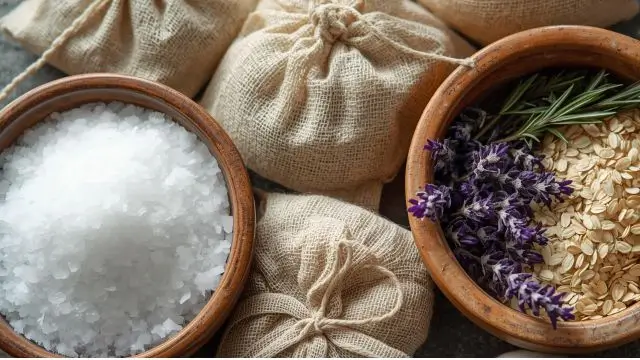
Note that my image shows fresh rosemary and lavender but you should use dried for these bath sachets
How to Use
Use as a mess-free herbal bath. Start with a small amount the first time so you can see how the scent, texture, and strength work for you.
Storage
Store dry mixes and oils in a cool, dark place. Refrigerate water-based herbal sprays and rinses and use them quickly. Discard any recipe that changes smell, color, or texture.
Variations & Substitutions
Softer Herbal Version
Pair rosemary with lavender for a gentler aroma.
Brighter Version
Pair rosemary with lemon for a cleaner, fresher scent when the recipe format allows essential oils.
Safety Considerations
- For external use only unless the recipe is clearly described as a bath or home fragrance preparation.
- Perform a patch test before using any new topical recipe.
- Avoid contact with eyes, inner ears, mucous membranes, and broken or irritated skin.
- Keep essential oils away from children and pets; do not use rosemary essential oil around babies or very young children.
- Consult a qualified professional before using rosemary essential oil if pregnant, breastfeeding, managing epilepsy, taking medication, or using on children.
- Use caution with rosemary essential oil if sensitive to strong camphoraceous oils.
- Keep herbs out of drains where possible by straining or using a sachet.
Additional Notes
This recipe is written as a small, practical batch so readers can test it before committing to larger quantities.
This recipe is for general home use and is not intended to diagnose, treat, cure, or prevent any disease. Rosemary essential oil is concentrated; use sensible dilution and discontinue use if irritation occurs.
A sachet gives you the benefit of herbs in the bath without leaving rosemary pieces and oats floating in the tub.
For oils, salts, scrubs, and sachets, dried rosemary is usually the better choice because it keeps the recipe drier and more stable. Fresh rosemary is best saved for culinary use or immediate-use herbal preparations.
Yes, but make the small version first. Rosemary can be quite aromatic, and water-based recipes should not be made in large batches unless you are using proper cosmetic preservation.
Yes, where essential oil is included, you can usually leave it out for a milder herb-based version. The scent will be softer and less concentrated.
Explore more herbal remedies, salves, balms, and infused preparations using these ingredients
Recommended Supplies
Use clean, dry equipment and label the finished recipe with the date made.
- Mixing bowl or heat-safe cup
- Spoon
- Clean jar, bottle, or sachet bags
- Label