

Rosemary Foot Soak
This rosemary foot soak was developed for tired feet that need a simple herbal reset at the end of the day. Epsom salt and sea salt form the base, dried rosemary gives the soak a garden-herbal character, and a small amount of peppermint adds a clean cooling scent.
It is a dry jar mix, so it is easy to keep beside the bath or make as a small handmade gift.
Benefits
- Good use for dried rosemary and rosemary essential oil
- Simple dry mix with a long shelf life if kept dry
- Refreshing option after standing, walking, or gardening
- More herbal and less floral than lavender foot soaks
Ingredients
- 1½ cups Epsom salt
- ½ cup coarse sea salt
- 2 tablespoons dried rosemary leaf, lightly crushed
- 8 drops rosemary essential oil
- 6 drops peppermint essential oil
- 4 drops lavender essential oil
Dried rosemary:
The dried herb gives the soak visual appeal and releases aroma in warm water.
Rosemary essential oil:
Rosemary strengthens the herbal scent so the foot soak does not smell flat.
Peppermint essential oil:
Peppermint gives a fresh foot-care note, but it is kept moderate for soaking.
Recommended Supplies
Choose a wide-mouth jar so the soak is easy to scoop.
- 16 oz jar
- Mixing bowl
- Spoon
- Foot basin
Equipment
- Mixing bowl
- 16 oz jar
- Foot basin
Method
- Add the salts and dried rosemary to a bowl.
- Drop the essential oils over the salts and stir very well.
- Transfer to a dry jar and label.
- To use, scoop ¼–½ cup into a basin of warm water.
How to Use
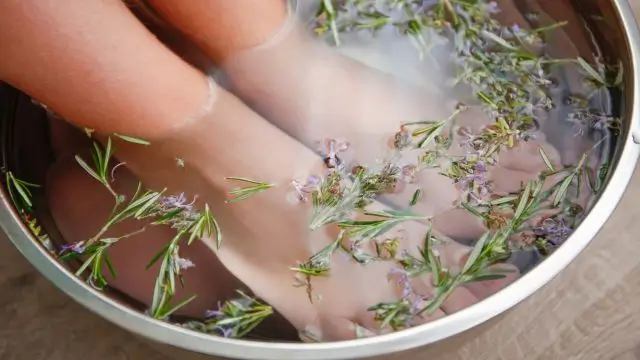
Add ¼–½ cup to a basin of warm water and soak feet for 10–15 minutes. Pat dry and follow with balm or moisturizer if desired.
Storage
Keep the jar tightly closed and dry. Use within 3–6 months.
Variations & Substitutions
Foot Soak Variations
Rosemary Lemon Foot Soak
Replace lavender with lemon for a brighter scent.
- 8 drops rosemary essential oil
- 6 drops peppermint essential oil
- 4 drops lemon essential oil
Herb-Only Foot Soak
Omit essential oils and use ¼ cup dried rosemary instead.
Safety Considerations
- For external use only unless the recipe is clearly described as a bath or home fragrance preparation.
- Perform a patch test before using any new topical recipe.
- Avoid contact with eyes, inner ears, mucous membranes, and broken or irritated skin.
- Keep essential oils away from children and pets; do not use rosemary essential oil around babies or very young children.
- Consult a qualified professional before using rosemary essential oil if pregnant, breastfeeding, managing epilepsy, taking medication, or using on children.
- Use caution getting in and out of the foot basin.
- Avoid on cracked, bleeding, or irritated feet.
- People with diabetes, circulation issues, or reduced foot sensation should ask a professional before using hot foot soaks.
Additional Notes
For easier cleanup, place the dried rosemary in a small muslin bag before adding it to the foot basin.
This recipe is for general home use and is not intended to diagnose, treat, cure, or prevent any disease. Rosemary essential oil is concentrated; use sensible dilution and discontinue use if irritation occurs.
It is better to strain or bag the herbs before draining the basin, especially if your plumbing clogs easily.
Start with ¼ cup for a small basin or ½ cup for a larger foot bath.
It was designed as a foot soak. For a full bath, reduce the essential oils or make a separate bath-safe formula.
The dried herb gives a botanical soak experience, while the essential oil strengthens the aroma in a small amount of salts.
Recommended Supplies
Choose a wide-mouth jar so the soak is easy to scoop.
- 16 oz jar
- Mixing bowl
- Spoon
- Foot basin