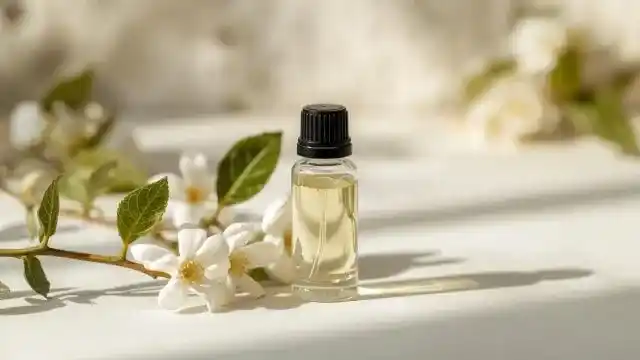

Jasmine essential oil (Jasminum grandiflorum) is an aromatic extract obtained from the flowers of a flowering vine or shrub in the Oleaceae family, native to South Asia and regions of the Middle East. It is known for its rich, floral, exotic, and sweet with soft fruit and indolic depth. and is used in aromatherapy, body oils, and perfume or home blends depending on the material.
Jasmine flowers have been cherished for centuries in perfumery, adornment, and aromatic ritual. The concentrated extract is now used in perfumery, body oils, and select diffuser blends where its lush floral character can be appreciated in very small amounts.
Unlike many distilled oils, jasmine is usually supplied as an absolute or aromatic extract because the flowers are delicate and highly prized. In practical use, only a small amount is usually needed to shape a blend, which is why it remains a favorite in premium perfumery and special-occasion body care. Jasmine absolute Essential Oil is made from the flowering Jasmine plant.
Essential Oil Overview
Botanical name:Jasminum grandiflorum
Plant part used: Flowers
Extraction method: Solvent extraction
Aroma profile: Rich, floral, exotic, and sweet with soft fruit and indolic depth.
Adds a luxurious floral heart to perfume and body blends
Creates an emotionally rich and comforting atmosphere
Pairs beautifully with citrus, woods, and other florals
A little goes a long way in premium aromatic formulas
Types available:
Jasmine grandiflorum absolute
Jasmine sambac absolute
Jasmine CO2 extract
Organic jasmine absolute
Aromatic Profile
Jasmine is prized far more for its perfumery beauty and emotional effect than for broad diffuser use, and it is usually used in very small amounts because of its strength and cost.
Scent family: Floral and sensual.
Fragrance notes: Deep white-flower sweetness with fruity warmth, green facets, and a soft narcotic richness.
Similar to: Neroli and ylang ylang, though jasmine is deeper, warmer, and more sensual.
Blending Suggestions
Jasmine blends exquisitely with citrus oils, florals, warm woods, and soft herb-spice accents.
This blend is commonly used in pulse-point or perfume-oil routines when a floral profile should feel luminous, deep, and elegant.
Common Uses
Perfumery: A classic material for natural perfumes, body oils, and pulse-point blends.
Massage oil (diluted): Use in luxurious body blends where a rich floral note is desired.
Aromatherapy: Diffuse sparingly or use in personal inhalers when a deeply floral atmosphere is wanted.
Bath ritual: Blend with carrier oil or unscented bath salts for an indulgent floral bathing experience.
Anointing blends: Often used in special-event or evening aromatic formulas because of its opulent scent.
Targeted Uses
Mood-focused rituals: Frequently chosen for self-care blends intended to feel comforting, uplifting, and emotionally rich.
Luxury body care: Popular in body oils and creams when a more expensive, perfumery-style floral note is wanted.
Romantic perfumery: A mainstay in sensual and evening perfume accords.
Floral deepening: Useful when other floral oils need warmth, softness, and persistence.
Some flowers are valued not only for beauty, but for the atmosphere they create the moment they enter a room.
— Traditional floral perfumery note
Preparation Methods
Jasmine Essential Oil can be prepared in several ways:
Topical Application
Dilute well in a carrier oil before skin use. Jasmine is often used at low percentages because its aroma is very strong, even though the extract itself may feel softer than many sharp top notes.
Remedies:Coming soon jasmine perfume-oil recipes.
Perfume Oil
Blend jasmine with jojoba, fractionated coconut oil, or perfumer’s alcohol to create a floral heart in natural perfume. It works beautifully with citrus, sandalwood, and other white florals.
Remedies:Coming soon floral bath rituals with jasmine.
Bath
Mix a very small amount with carrier oil or bath salts before adding to warm water. Too much can quickly overwhelm the blend.
Remedies:Coming soon evening body blends featuring jasmine.
Safety Considerations
Jasmine absolute or extract is usually used at low dilution because of its potency, richness, and cost, and it should still be patch tested before skin use.
However, essential oils are highly concentrated plant extracts and are best used with care.
Always dilute before topical use and patch test before broader application.
Because jasmine is often sold as an absolute or solvent extract, quality and supplier transparency matter.
Avoid contact with eyes, inner ears, and mucous membranes.
Diffuse or inhale in moderation; a very small amount is often enough.
Keep out of reach of children and pets.
This information is educational and not medical advice; consult a qualified healthcare professional for individual guidance.
This information is provided for educational purposes only and is not medical advice.
Image Disclaimer: Images are for reference only and should not be used as the sole method of identification. Always confirm identification with a qualified source.
Frequently Asked Questions
What is jasmine essential oil used for?
Jasmine is most commonly used in natural perfume, luxury body oils, bath rituals, and emotionally rich aromatic blends. It is a classic floral material when depth and elegance are more important than sharp freshness.
Is jasmine a true essential oil or an absolute?
Jasmine is often sold as an absolute or solvent extract rather than a steam-distilled essential oil. That is because the delicate flowers do not usually yield a typical distilled oil in a practical way.
What part of the jasmine plant is used?
The aromatic material comes from the flowers. These blossoms provide the lush, sweet, and deeply floral aroma associated with jasmine.
Can jasmine be used in a diffuser?
Yes, but it is usually used in tiny amounts because it is rich and powerful. Many people prefer it in perfume oils, roll-ons, or body blends rather than large diffuser quantities.
What does jasmine smell like?
Jasmine smells rich, floral, sweet, and exotic with fruity warmth and a soft indolic depth. It is usually deeper and more sensual than lighter white florals such as neroli.
What blends well with jasmine?
Jasmine blends beautifully with bergamot, sweet orange, sandalwood, frankincense, geranium, rose, cardamom, and helichrysum.
Jasmine essential oil (Jasminum grandiflorum) is an aromatic extract obtained from the flowers of a flowering vine or shrub in the Oleaceae family, native to South Asia and regions of the Middle East. It is known for its rich, floral, exotic, and sweet with soft fruit and indolic depth. and is used in aromatherapy, body oils, and perfume or home blends depending on the material.
Jasmine flowers have been cherished for centuries in perfumery, adornment, and aromatic ritual. The concentrated extract is now used in perfumery, body oils, and select diffuser blends where its lush floral character can be appreciated in very small amounts.
Unlike many distilled oils, jasmine is usually supplied as an absolute or aromatic extract because the flowers are delicate and highly prized. In practical use, only a small amount is usually needed to shape a blend, which is why it remains a favorite in premium perfumery and special-occasion body care. Jasmine absolute Essential Oil is made from the flowering Jasmine plant.
Aromatic Profile
Jasmine is prized far more for its perfumery beauty and emotional effect than for broad diffuser use, and it is usually used in very small amounts because of its strength and cost.
Scent family: Floral and sensual.
Fragrance notes: Deep white-flower sweetness with fruity warmth, green facets, and a soft narcotic richness.
Similar to: Neroli and ylang ylang, though jasmine is deeper, warmer, and more sensual.
Common Uses
Perfumery: A classic material for natural perfumes, body oils, and pulse-point blends.
Massage oil (diluted): Use in luxurious body blends where a rich floral note is desired.
Aromatherapy: Diffuse sparingly or use in personal inhalers when a deeply floral atmosphere is wanted.
Bath ritual: Blend with carrier oil or unscented bath salts for an indulgent floral bathing experience.
Anointing blends: Often used in special-event or evening aromatic formulas because of its opulent scent.
Targeted Uses
Mood-focused rituals: Frequently chosen for self-care blends intended to feel comforting, uplifting, and emotionally rich.
Luxury body care: Popular in body oils and creams when a more expensive, perfumery-style floral note is wanted.
Romantic perfumery: A mainstay in sensual and evening perfume accords.
Floral deepening: Useful when other floral oils need warmth, softness, and persistence.
Some flowers are valued not only for beauty, but for the atmosphere they create the moment they enter a room.
— Traditional floral perfumery note
Preparation Methods
Jasmine Essential Oil can be prepared in several ways:
Topical Application
Dilute well in a carrier oil before skin use. Jasmine is often used at low percentages because its aroma is very strong, even though the extract itself may feel softer than many sharp top notes.
Remedies:Coming soon jasmine perfume-oil recipes.
Perfume Oil
Blend jasmine with jojoba, fractionated coconut oil, or perfumer’s alcohol to create a floral heart in natural perfume. It works beautifully with citrus, sandalwood, and other white florals.
Remedies:Coming soon floral bath rituals with jasmine.
Bath
Mix a very small amount with carrier oil or bath salts before adding to warm water. Too much can quickly overwhelm the blend.
Remedies:Coming soon evening body blends featuring jasmine.
Safety Considerations
Jasmine absolute or extract is usually used at low dilution because of its potency, richness, and cost, and it should still be patch tested before skin use.
However, essential oils are highly concentrated plant extracts and are best used with care.
Always dilute before topical use and patch test before broader application.
Because jasmine is often sold as an absolute or solvent extract, quality and supplier transparency matter.
Avoid contact with eyes, inner ears, and mucous membranes.
Diffuse or inhale in moderation; a very small amount is often enough.
Keep out of reach of children and pets.
This information is educational and not medical advice; consult a qualified healthcare professional for individual guidance.
This information is provided for educational purposes only and is not medical advice.
Image Disclaimer: Images are for reference only and should not be used as the sole method of identification. Always confirm identification with a qualified source.
Frequently Asked Questions
What is jasmine essential oil used for?
Jasmine is most commonly used in natural perfume, luxury body oils, bath rituals, and emotionally rich aromatic blends. It is a classic floral material when depth and elegance are more important than sharp freshness.
Is jasmine a true essential oil or an absolute?
Jasmine is often sold as an absolute or solvent extract rather than a steam-distilled essential oil. That is because the delicate flowers do not usually yield a typical distilled oil in a practical way.
What part of the jasmine plant is used?
The aromatic material comes from the flowers. These blossoms provide the lush, sweet, and deeply floral aroma associated with jasmine.
Can jasmine be used in a diffuser?
Yes, but it is usually used in tiny amounts because it is rich and powerful. Many people prefer it in perfume oils, roll-ons, or body blends rather than large diffuser quantities.
What does jasmine smell like?
Jasmine smells rich, floral, sweet, and exotic with fruity warmth and a soft indolic depth. It is usually deeper and more sensual than lighter white florals such as neroli.
What blends well with jasmine?
Jasmine blends beautifully with bergamot, sweet orange, sandalwood, frankincense, geranium, rose, cardamom, and helichrysum.
Essential Oil Overview
Botanical name:Jasminum grandiflorum
Plant part used: Flowers
Extraction method: Solvent extraction
Aroma profile: Rich, floral, exotic, and sweet with soft fruit and indolic depth.