

Plantain Benefits & Uses (Plantago major)

Plantain, usually referring to Plantago major or related Plantago species, is a low-growing perennial herb in the Plantaginaceae family. It produces a rosette of broad ribbed leaves and slender flower spikes, and it is native to Europe and parts of Asia but now grows widely throughout North America. The leaves and seeds are the parts most often used in traditional herbal practice.

Plantain has long been one of the classic “wayside herbs” in European and North American folk medicine. It is especially associated with fresh leaf poultices, soothing skin applications, and simple household remedies made from a plant that was easy to find close to home.

Because plantain grows so readily in lawns, paths, and disturbed ground, it is one of the most recognizable and accessible herbs in the United States.

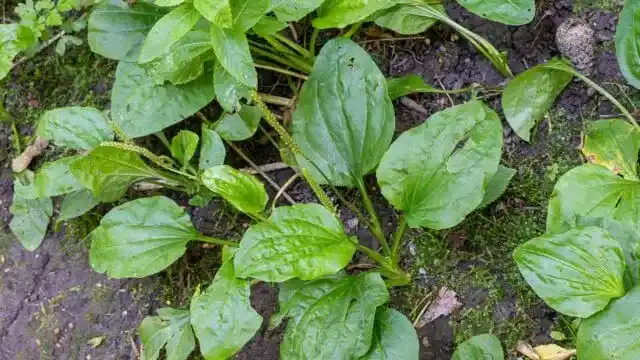
Plantain Benefits and Traditional Uses

Plantain has traditionally been used to support:

  • Fresh leaf poultices for bites, stings, and minor skin irritation
  • Soothing external washes and salves
  • Traditional teas used for throat and digestive comfort
  • Household remedies made from a readily available yard herb
  • Herbal preparations for minor scrapes and rough skin
  • Seed uses related to fiber and traditional digestive support

Historically, plantain followed human settlement so closely that it became one of the best-known folk herbs in Europe and North America. It was often gathered fresh from the edge of paths and fields and applied immediately as a practical household plant for everyday minor complaints.

“Plantain has long been one of the most trusted herbs at the edge of the path, gathered fresh for simple household use.”

— Traditional folk herbal practice

Plantain Preparation Methods

Plantain can be prepared in several traditional ways:


Poultice

Fresh plantain leaves may be crushed or bruised and applied externally as a simple traditional poultice.

Part of the plant used: Leaves

Infused Oil

Dried or fresh leaves may be infused in a carrier oil and later used in salves and other external herbal preparations.

Part of the plant used: Leaves

Tea or Hot Infusion

The dried leaves may be steeped in hot water to make a mild herbal infusion used in traditional internal practice.

Part of the plant used: Leaves

Salve or Balm

Plantain-infused oil may be blended with beeswax to create a traditional soothing skin balm.

Part of the plant used: Leaves


Growing Plantain

Plantain is a hardy perennial herb that forms a low rosette of leaves close to the ground and sends up narrow flower spikes through the growing season. It grows easily in compacted, disturbed, and well-used soil, which is why it often appears in lawns and pathways.

  • Prefers full sun to partial shade and tolerates a wide range of soils
  • Needs moderate moisture but is adaptable once established
  • Hardy in USDA growing zones 3-9 across most of the United States
  • Often found growing wild in lawns, gardens, paths, meadows, and disturbed ground

Plantain is easy to grow, but many gardeners never need to plant it because it appears on its own. In tidy gardens it may be treated as a weed, while herb growers often welcome it as a useful volunteer plant.


Safety Considerations

Plantain has a long history of traditional use and is generally considered a mild herb, but care is still appropriate with any herbal preparation.

However:

  • Some individuals may experience mild digestive discomfort when using large amounts of plantain internally.
  • Fresh plant material gathered from roadsides, lawns, or sprayed areas may contain contaminants and should not be used unless the source is clean.
  • Topical use may occasionally cause irritation in very sensitive individuals, so patch testing can be helpful.
  • People with known sensitivity to Plantago species should use caution.
  • Pregnant or breastfeeding individuals should consult a qualified healthcare professional before using concentrated internal preparations regularly.
  • Always identify wild plantain carefully and harvest only from safe, unsprayed areas.

This information is provided for educational purposes only and is not medical advice.

Image Disclaimer: Images are for reference only and should not be used as the sole method of identification. Always confirm identification with a qualified source.
Frequently Asked Questions
What is plantain traditionally used for?

Plantain is traditionally used for fresh poultices, skin preparations, and mild herbal infusions. It is especially known in folk herbalism as a handy household herb for bites, stings, and minor irritation.

What part of plantain is used in herbal preparations?

The leaves are the part most commonly used, especially when fresh. The seeds are also used in some traditional preparations, but the leaf is the most familiar part in household herbal practice.

How is plantain prepared?

Plantain is often prepared as a fresh poultice, infused oil, salve, or tea. The fresh leaf is especially valued because it can be gathered and used quickly in simple traditional remedies.

Can plantain grow in the United States?

Yes. Plantain grows throughout most of the United States and is hardy in USDA zones 3-9. It commonly appears in lawns, pathways, gardens, and disturbed ground.

Is plantain considered a weed?

Often, yes. Broadleaf plantain is commonly treated as a lawn weed because it thrives in compacted soil and spreads easily. Herbalists, however, often value it as a useful and very accessible plant.

Are there safety concerns with plantain?

Plantain is generally considered mild, but wild-harvested leaves should come only from clean unsprayed areas. Some people may also experience mild irritation or digestive upset, especially with larger amounts.

Plantain Benefits and Traditional Uses

Help Us Improve the Plantain Page

Do you grow, photograph, study, or work with this plant?

If you have an accurate photo, growing experience, traditional use note, identification detail, correction, or useful source to share, we would love to hear from you.

Your contribution may help improve the accuracy, usefulness, and educational value of this page for other readers.


Share a photo, correction, or plant note →

Botanical Overview

  • Botanical name: Plantago major
  • Family: Plantaginaceae
  • Plant type: Perennial herb
  • Native region: Europe and Asia
  • Common names: Broadleaf plantain, common plantain, greater plantain, waybread