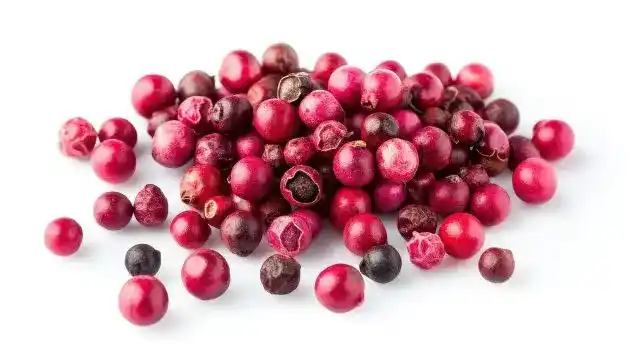
Pink Pepper essential oil is distilled from the berries of Schinus molle, a member of the Anacardiaceae family native to South America. Although it is called pepper because of its bright spicy effect, it is not the same species as black or white pepper and has a far more sparkling, rosy personality.
Traditionally, pink pepper berries have been appreciated for their aroma and vivid culinary character. In essential-oil and fragrance work, the oil is valued because it gives spice without heaviness and can sit comfortably beside florals, citrus, and woods.
This is one of the easiest spice oils to place in a modern blend because it feels lively and elegant rather than dense.
Essential Oil Overview
Botanical name:Schinus molle
Plant part used: Berries
Extraction method: Steam distillation
Aroma profile: Bright, rosy, and lightly fruity with sparkling pepper spice and a soft woody trail.
Pink Pepper behaves like a spice with perfume manners. It is peppery, but also buoyant, rosy, and almost translucent compared with the denser pepper oils. That makes it valuable in modern blends where spice should feel stylish, vivid, and airy rather than heavy.
Try 2 drops Pink Pepper, 2 drops Bergamot, 2 drops Geranium, and 1 drop Sandalwood in a diffuser for a bright modern floral-spice blend.
Common Uses
Modern natural perfume with a rosy spice accent
Diffuser blends that need energy without harshness
Floral-wood compositions that benefit from a sparkling middle note
Body products where spice should feel elegant and light
Targeted Uses
Choose Pink Pepper when black pepper feels too heavy or culinary
Excellent for adding lift to citrus, geranium, rose-style, and woody blends
Very useful in transitional formulas that move from fruit or floral into dry wood
Pink Pepper brings spice into fragrance with a lighter hand, letting brightness and berry character shine where heavier peppers would feel too weighty.
Modern natural perfumery tradition
Preparation Methods
Topical: Blend Pepper Pink into a carrier oil, balm, or lotion at a low dilution so its spicy character adds warmth without overwhelming the skin.
Diffuser: Use Pepper Pink in a diffuser for spice, movement, and aromatic texture, starting small because pepper notes rise quickly.
Bath: For bath use, first disperse Pepper Pink thoroughly in a suitable carrier or dispersant and keep the amount very low because spice oils can feel strong on skin.
Other: It also works beautifully in perfume oils, hair mists, and modern room sprays with a polished spicy edge.
Safety Considerations
Pink Pepper is generally more sheer in aroma than black pepper, but it still deserves careful dilution and patch testing.
Dilute to about 0.5-2% for topical use.
Patch test before broader application, especially in leave-on fragrance products.
Avoid contact with eyes, mucous membranes, and very sensitive skin.
Use in moderation if you are highly reactive to berry or spice aromatics.
Pregnant or breastfeeding users and anyone with reactive skin should seek professional guidance before frequent use.
Diffuse moderately around pets and keep the room ventilated.
This information is for educational purposes only and is not medical advice. Essential oils are highly concentrated and should be used carefully, especially for children, during pregnancy, around pets, and on sensitive skin.
Image Disclaimer: Images are for reference only and should not be used as the sole method of identification. Always confirm identification with a qualified source.
Frequently Asked Questions
Is Pink Pepper the same as Black Pepper essential oil?
No. Pink Pepper is usually distilled from Schinus molle, while Black Pepper comes from Piper nigrum. Pink Pepper feels brighter, more rosy, and more sparkling, whereas Black Pepper feels warmer, drier, and more traditionally spicy. Side-by-side smelling quickly shows how the spice texture changes from one pepper style to another.
What does Pink Pepper essential oil smell like?
It smells spicy, but also rosy, lightly fruity, and airy. Many people find it more elegant and modern than black pepper because the berry character softens the dryness and gives the oil a brighter personality. Side-by-side smelling quickly shows how the spice texture changes from one pepper style to another.
Does Pink Pepper work well in floral blends?
Yes. Pink Pepper is one of the easiest spice oils to place with florals because it does not weigh them down. It pairs especially well with geranium, rose-style, neroli-style, and citrus-floral accords. Side-by-side smelling quickly shows how the spice texture changes from one pepper style to another.
Is Pink Pepper a good perfume oil?
Yes, especially for modern natural perfume. It adds movement and sparkle in the middle of a composition, helping connect bright top notes to woody or resinous base notes without making the fragrance feel heavy. Side-by-side smelling quickly shows how the spice texture changes from one pepper style to another.
What oils pair well with Pink Pepper?
Pink Pepper blends well with bergamot, mandarin, geranium, sandalwood, juniper, and frankincense-style woods. It is best supported by oils that keep its brightness visible rather than burying it under syrupy sweetness. Side-by-side smelling quickly shows how the spice texture changes from one pepper style to another.
Can Pink Pepper be used on skin?
It can be used topically when properly diluted and patch tested first. Even though it feels lighter than black pepper, it is still a spice-related aromatic and should be handled with care in body products. Side-by-side smelling quickly shows how the spice texture changes from one pepper style to another.
Pink Pepper essential oil is distilled from the berries of Schinus molle, a member of the Anacardiaceae family native to South America. Although it is called pepper because of its bright spicy effect, it is not the same species as black or white pepper and has a far more sparkling, rosy personality.
Traditionally, pink pepper berries have been appreciated for their aroma and vivid culinary character. In essential-oil and fragrance work, the oil is valued because it gives spice without heaviness and can sit comfortably beside florals, citrus, and woods.
This is one of the easiest spice oils to place in a modern blend because it feels lively and elegant rather than dense.
Aromatic Profile
Pink Pepper behaves like a spice with perfume manners. It is peppery, but also buoyant, rosy, and almost translucent compared with the denser pepper oils. That makes it valuable in modern blends where spice should feel stylish, vivid, and airy rather than heavy.
Similar to: Bergamot, Geranium, Juniper, modern spicy-citrus accords
Common Uses
Modern natural perfume with a rosy spice accent
Diffuser blends that need energy without harshness
Floral-wood compositions that benefit from a sparkling middle note
Body products where spice should feel elegant and light
Targeted Uses
Choose Pink Pepper when black pepper feels too heavy or culinary
Excellent for adding lift to citrus, geranium, rose-style, and woody blends
Very useful in transitional formulas that move from fruit or floral into dry wood
Pink Pepper brings spice into fragrance with a lighter hand, letting brightness and berry character shine where heavier peppers would feel too weighty.
Modern natural perfumery tradition
Preparation Methods
Topical: Blend Pepper Pink into a carrier oil, balm, or lotion at a low dilution so its spicy character adds warmth without overwhelming the skin.
Diffuser: Use Pepper Pink in a diffuser for spice, movement, and aromatic texture, starting small because pepper notes rise quickly.
Bath: For bath use, first disperse Pepper Pink thoroughly in a suitable carrier or dispersant and keep the amount very low because spice oils can feel strong on skin.
Other: It also works beautifully in perfume oils, hair mists, and modern room sprays with a polished spicy edge.
Safety Considerations
Pink Pepper is generally more sheer in aroma than black pepper, but it still deserves careful dilution and patch testing.
Dilute to about 0.5-2% for topical use.
Patch test before broader application, especially in leave-on fragrance products.
Avoid contact with eyes, mucous membranes, and very sensitive skin.
Use in moderation if you are highly reactive to berry or spice aromatics.
Pregnant or breastfeeding users and anyone with reactive skin should seek professional guidance before frequent use.
Diffuse moderately around pets and keep the room ventilated.
This information is for educational purposes only and is not medical advice. Essential oils are highly concentrated and should be used carefully, especially for children, during pregnancy, around pets, and on sensitive skin.
Image Disclaimer: Images are for reference only and should not be used as the sole method of identification. Always confirm identification with a qualified source.
Frequently Asked Questions
Is Pink Pepper the same as Black Pepper essential oil?
No. Pink Pepper is usually distilled from Schinus molle, while Black Pepper comes from Piper nigrum. Pink Pepper feels brighter, more rosy, and more sparkling, whereas Black Pepper feels warmer, drier, and more traditionally spicy. Side-by-side smelling quickly shows how the spice texture changes from one pepper style to another.
What does Pink Pepper essential oil smell like?
It smells spicy, but also rosy, lightly fruity, and airy. Many people find it more elegant and modern than black pepper because the berry character softens the dryness and gives the oil a brighter personality. Side-by-side smelling quickly shows how the spice texture changes from one pepper style to another.
Does Pink Pepper work well in floral blends?
Yes. Pink Pepper is one of the easiest spice oils to place with florals because it does not weigh them down. It pairs especially well with geranium, rose-style, neroli-style, and citrus-floral accords. Side-by-side smelling quickly shows how the spice texture changes from one pepper style to another.
Is Pink Pepper a good perfume oil?
Yes, especially for modern natural perfume. It adds movement and sparkle in the middle of a composition, helping connect bright top notes to woody or resinous base notes without making the fragrance feel heavy. Side-by-side smelling quickly shows how the spice texture changes from one pepper style to another.
What oils pair well with Pink Pepper?
Pink Pepper blends well with bergamot, mandarin, geranium, sandalwood, juniper, and frankincense-style woods. It is best supported by oils that keep its brightness visible rather than burying it under syrupy sweetness. Side-by-side smelling quickly shows how the spice texture changes from one pepper style to another.
Can Pink Pepper be used on skin?
It can be used topically when properly diluted and patch tested first. Even though it feels lighter than black pepper, it is still a spice-related aromatic and should be handled with care in body products. Side-by-side smelling quickly shows how the spice texture changes from one pepper style to another.
Essential Oil Overview
Botanical name:Schinus molle
Plant part used: Berries
Extraction method: Steam distillation
Aroma profile: Bright, rosy, and lightly fruity with sparkling pepper spice and a soft woody trail.