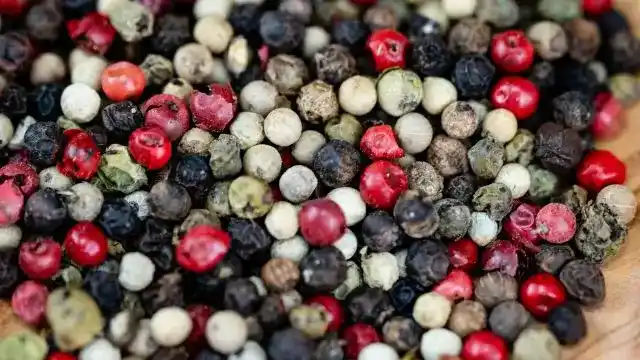

Pepper essential oils can come from more than one botanical source and more than one plant part, so a single ‘pepper’ label is often not specific enough. This overview page brings together the main pepper styles used in aromatic work, including true pepper berry oils and related peppery botanicals.
In perfumery and blending, the differences matter. Some pepper oils are dry and kitchen-spice familiar, some are greener and fresher, some are rosy and sparkling, and others smell like the living leaf rather than the berry.
Choosing the right pepper type changes the whole mood of a formula. That is why this page is built as a comparison page rather than a one-oil page. Pepper essential oils vary depending on both the species and how the fruit is processed. Black, white, and green pepper oils are all derived from the same plant, Piper nigrum, while pink pepper comes from a different species and offers a distinct aroma and character.
Helps distinguish the aromatic differences between pepper styles
Supports more precise spice blending in perfumery and body care
Adds warmth, movement, and structure to herbal and citrus formulas
Useful when choosing between dry, green, rosy, or leafy pepper profiles
Types Available
Black Pepper (Piper nigrum – warm, dry, classic spice)
Green Pepper (Piper nigrum – fresher unripe berry brightness)
White Pepper (Piper nigrum – cleaner, drier, husk-removed spice)
Pink Pepper (Schinus molle – rosy, sparkling berry spice)
Pepper Leaf (Tasmannia lanceolata – green leafy bush pepper)
Aromatic Profile
Pepper is not one aroma. Black pepper is warm and familiar, green pepper is fresher and brighter, white pepper is cleaner and drier, pink pepper is more sparkling and berry-like, and pepper leaf is distinctly leafy and green. This overview page exists because formulation changes dramatically depending on which pepper style you choose.
For a comparison diffuser trial, try 2 drops of your chosen pepper oil, 2 drops Bergamot, 2 drops Rosemary, and 1 drop Sandalwood to hear the pepper style clearly.
Common Uses
Choosing the right pepper style for perfumes and diffuser blends
Adding warmth and structure to citrus, herb, and wood accords
Comparing dry spice, green spice, berry spice, and leafy pepper profiles
Building more accurate seasonal, savory, or modern spice fragrances
Targeted Uses
Use this page when you know you want pepper but have not yet decided which style
Helpful for comparing how black, green, pink, white, and leaf pepper behave in a formula
Ideal for fragrance work where the exact spice texture matters
Pepper is never just heat in aromatic work; it is texture, direction, and the exact kind of movement a blend needs.
Traditional spice and perfumery practice
Preparation Methods
Topical: Blend Pepper Essential Oil (All Types) into a carrier oil, balm, or lotion at a low dilution so its spicy character adds warmth without overwhelming the skin.
Diffuser: Use Pepper Essential Oil (All Types) in a diffuser for spice, movement, and aromatic texture, starting small because pepper notes rise quickly.
Bath: For bath use, first disperse Pepper Essential Oil (All Types) thoroughly in a suitable carrier or dispersant and keep the amount very low because spice oils can feel strong on skin.
Other: This overview is especially useful for perfume design, room spray planning, and selecting the right spice accent for body oils or soaps.
Safety Considerations
Pepper oils vary in intensity, but most deserve conservative topical dilution because warming spice materials can feel stimulating on skin.
Start around 0.5-2% dilution for topical use, especially with spice-led blends.
Patch test before broader application.
Avoid contact with eyes, mucous membranes, and freshly irritated skin.
Do not assume one pepper oil can be substituted directly for another without changing the formula.
Pregnant or breastfeeding users and anyone with sensitive skin should seek professional guidance before frequent use.
Diffuse in moderation around pets and provide good ventilation.
This information is for educational purposes only and is not medical advice. Essential oils are highly concentrated and should be used carefully, especially for children, during pregnancy, around pets, and on sensitive skin.
Image Disclaimer: Images are for reference only and should not be used as the sole method of identification. Always confirm identification with a qualified source.
Frequently Asked Questions
What is the difference between black, green, pink, white, and pepper leaf oils?
Black pepper is warm and classic, green pepper is fresher and brighter, white pepper is drier and cleaner, pink pepper is more rosy and sparkling, and pepper leaf smells leafy and botanical rather than berry-like. They are related by effect, not by identical aroma.
Is pink pepper a true pepper?
Not in the strict botanical sense. Pink pepper is usually distilled from Schinus species rather than Piper nigrum. It is used in a pepper family of aromas because it feels spicy and bright, but it has its own rosy berry character.
Why would someone need an all-types pepper page?
An all-types pepper page is useful because the exact pepper oil changes the personality of a blend. A formula built around black pepper feels very different from one built around green, white, pink, or leaf pepper. Side-by-side smelling quickly shows how the spice texture changes from one pepper style to another.
Which pepper oil is best for fresh modern fragrance?
Green pepper and pink pepper are often the easiest entry points for fresh modern fragrance because they give spice without the heavier dry warmth of black pepper. Pepper leaf can also work beautifully when a greener botanical texture is wanted.
Which pepper oil is best for warm woody blends?
Black pepper and white pepper are often the strongest choices for warm woody blends. Black pepper gives fuller familiar spice, while white pepper is drier and more streamlined. The best choice depends on whether you want more body or more precision.
Are pepper oils safe to use on skin?
They can be used topically when well diluted, but pepper oils should be approached with care because warming spice materials may feel stimulating. A low dilution, a patch test, and thoughtful formulation are sensible for any pepper-led body product. Side-by-side smelling quickly shows how the spice texture changes from one pepper style to another.
Pepper essential oils can come from more than one botanical source and more than one plant part, so a single ‘pepper’ label is often not specific enough. This overview page brings together the main pepper styles used in aromatic work, including true pepper berry oils and related peppery botanicals.
In perfumery and blending, the differences matter. Some pepper oils are dry and kitchen-spice familiar, some are greener and fresher, some are rosy and sparkling, and others smell like the living leaf rather than the berry.
Choosing the right pepper type changes the whole mood of a formula. That is why this page is built as a comparison page rather than a one-oil page. Pepper essential oils vary depending on both the species and how the fruit is processed. Black, white, and green pepper oils are all derived from the same plant, Piper nigrum, while pink pepper comes from a different species and offers a distinct aroma and character.
Pepper is not one aroma. Black pepper is warm and familiar, green pepper is fresher and brighter, white pepper is cleaner and drier, pink pepper is more sparkling and berry-like, and pepper leaf is distinctly leafy and green. This overview page exists because formulation changes dramatically depending on which pepper style you choose.
Similar to: Black Pepper, Cardamom, Ginger, Coriander Seed, aromatic spice accords
Common Uses
Choosing the right pepper style for perfumes and diffuser blends
Adding warmth and structure to citrus, herb, and wood accords
Comparing dry spice, green spice, berry spice, and leafy pepper profiles
Building more accurate seasonal, savory, or modern spice fragrances
Targeted Uses
Use this page when you know you want pepper but have not yet decided which style
Helpful for comparing how black, green, pink, white, and leaf pepper behave in a formula
Ideal for fragrance work where the exact spice texture matters
Pepper is never just heat in aromatic work; it is texture, direction, and the exact kind of movement a blend needs.
Traditional spice and perfumery practice
Preparation Methods
Topical: Blend Pepper Essential Oil (All Types) into a carrier oil, balm, or lotion at a low dilution so its spicy character adds warmth without overwhelming the skin.
Diffuser: Use Pepper Essential Oil (All Types) in a diffuser for spice, movement, and aromatic texture, starting small because pepper notes rise quickly.
Bath: For bath use, first disperse Pepper Essential Oil (All Types) thoroughly in a suitable carrier or dispersant and keep the amount very low because spice oils can feel strong on skin.
Other: This overview is especially useful for perfume design, room spray planning, and selecting the right spice accent for body oils or soaps.
Safety Considerations
Pepper oils vary in intensity, but most deserve conservative topical dilution because warming spice materials can feel stimulating on skin.
Start around 0.5-2% dilution for topical use, especially with spice-led blends.
Patch test before broader application.
Avoid contact with eyes, mucous membranes, and freshly irritated skin.
Do not assume one pepper oil can be substituted directly for another without changing the formula.
Pregnant or breastfeeding users and anyone with sensitive skin should seek professional guidance before frequent use.
Diffuse in moderation around pets and provide good ventilation.
This information is for educational purposes only and is not medical advice. Essential oils are highly concentrated and should be used carefully, especially for children, during pregnancy, around pets, and on sensitive skin.
Image Disclaimer: Images are for reference only and should not be used as the sole method of identification. Always confirm identification with a qualified source.
Frequently Asked Questions
What is the difference between black, green, pink, white, and pepper leaf oils?
Black pepper is warm and classic, green pepper is fresher and brighter, white pepper is drier and cleaner, pink pepper is more rosy and sparkling, and pepper leaf smells leafy and botanical rather than berry-like. They are related by effect, not by identical aroma.
Is pink pepper a true pepper?
Not in the strict botanical sense. Pink pepper is usually distilled from Schinus species rather than Piper nigrum. It is used in a pepper family of aromas because it feels spicy and bright, but it has its own rosy berry character.
Why would someone need an all-types pepper page?
An all-types pepper page is useful because the exact pepper oil changes the personality of a blend. A formula built around black pepper feels very different from one built around green, white, pink, or leaf pepper. Side-by-side smelling quickly shows how the spice texture changes from one pepper style to another.
Which pepper oil is best for fresh modern fragrance?
Green pepper and pink pepper are often the easiest entry points for fresh modern fragrance because they give spice without the heavier dry warmth of black pepper. Pepper leaf can also work beautifully when a greener botanical texture is wanted.
Which pepper oil is best for warm woody blends?
Black pepper and white pepper are often the strongest choices for warm woody blends. Black pepper gives fuller familiar spice, while white pepper is drier and more streamlined. The best choice depends on whether you want more body or more precision.
Are pepper oils safe to use on skin?
They can be used topically when well diluted, but pepper oils should be approached with care because warming spice materials may feel stimulating. A low dilution, a patch test, and thoughtful formulation are sensible for any pepper-led body product. Side-by-side smelling quickly shows how the spice texture changes from one pepper style to another.
For a comparison diffuser trial, try 2 drops of your chosen pepper oil, 2 drops Bergamot, 2 drops Rosemary, and 1 drop Sandalwood to hear the pepper style clearly.