
Lavender Bath Salts
These lavender bath salts were developed as a simple evening bath recipe with enough mineral salt to feel worthwhile, but not such a large batch that it sits unused in the cupboard. The formula combines Epsom salt, sea salt, baking soda, and lavender essential oil for a soft herbal bath that feels calming without being overly perfumed.
The 16 oz jar size is ideal for testing the blend, gifting, or keeping beside the bathtub for occasional use. It is a good first lavender recipe because it is easy to make, easy to customize, and visually appealing in a clear jar.
Benefits
- Creates a calming lavender bath without a complicated recipe.
- Uses a manageable 16 oz jar batch for testing or gifting.
- Baking soda softens the blend and helps distribute the essential oil.
- Works well as a simple evening bath soak.
Ingredients
- 1½ cups Epsom salt
- ½ cup coarse sea salt
- 2 tablespoons baking soda
- 18 drops lavender essential oil
- Optional: 1 tablespoon dried lavender buds, finely sifted
Ingredient Notes
Epsom salt:
Epsom salt forms the base of the soak and gives the recipe its classic bath salt feel.
Coarse sea salt:
Sea salt adds texture and helps make the finished jar look more like a traditional bath soak.
Baking soda:
Baking soda softens the blend, helps reduce clumping, and makes the bath salts feel smoother in the water.
Lavender essential oil:
True lavender essential oil (Lavandula angustifolia) gives this recipe its gentle floral-herbal bath aroma.
Dried lavender buds:
Dried lavender buds are optional. They look beautiful in the jar, but use them sparingly because loose botanicals can cling to the tub and need rinsing away.
Recommended Supplies
A wide-mouth jar makes these bath salts easier to scoop and store beside the tub.
- 16 oz glass jar with lid
- Mixing bowl
- Measuring cups and spoons
- Spoon or whisk
- Label
Equipment
- Medium mixing bowl
- Measuring cups
- Measuring spoon
- Spoon or small whisk
- 16 oz jar with lid
Method
- Add the baking soda to a mixing bowl.
- Drop the lavender essential oil onto the baking soda and stir until the scent is evenly distributed.
- Add the Epsom salt and sea salt. Stir slowly so the salts are evenly combined.
- If using dried lavender buds, stir them in last.
- Spoon the bath salts into a clean, dry 16 oz jar. Cap tightly and label.
How to Use
Add ¼–½ cup of lavender bath salts to a warm bath and swirl the water to dissolve. Soak for 10–20 minutes, then rinse the tub after draining, especially if dried lavender buds were used.
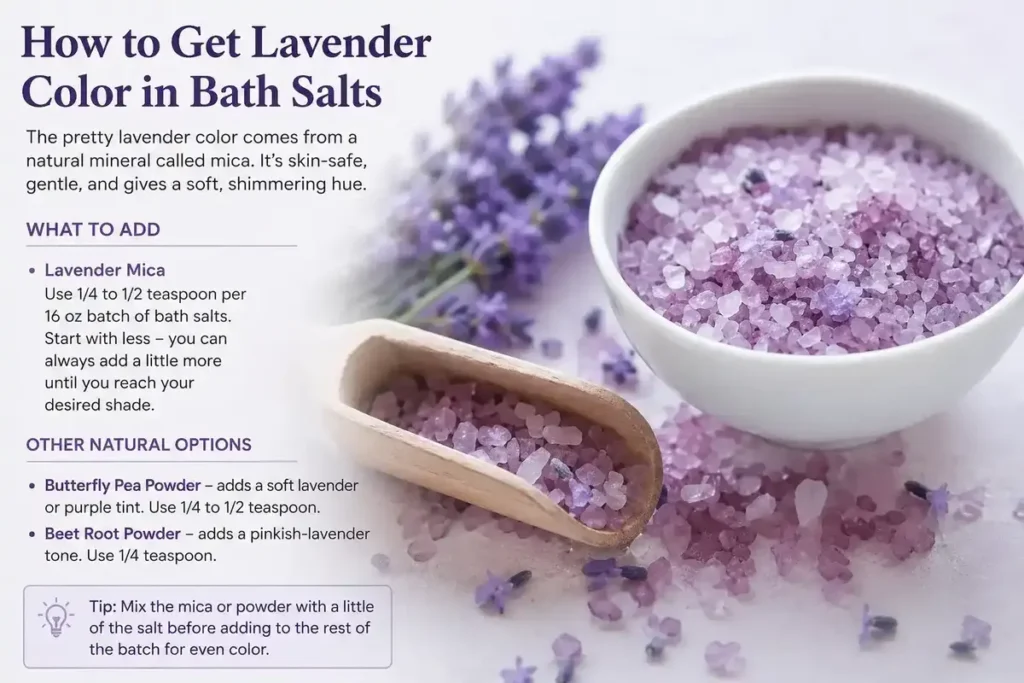
How to Add a Lavender Color to Bath Salts
For a soft lavender color, add a very small amount of cosmetic-grade lavender mica powder to the bath salts. Start with just ⅛ teaspoon per 16 oz batch, mix well, then add a little more if you want a stronger purple tone.
You can also use Brazilian purple clay for a more muted, natural-looking lavender shade, or a small pinch of butterfly pea flower powder for a softer botanical tint.
Tip: Mix the mica, clay, or botanical powder into a small portion of the salt first, then stir that colored salt through the full batch. This helps the color spread more evenly.
Storage
Store tightly sealed in a cool, dry place. Keep water out of the jar to prevent clumping. Use within 3–6 months for best aroma.
Variations & Substitutions
Alternative Lavender Bath Salt Blends
Use the same 16 oz salt base and replace the 18 drops of lavender with one of these blends.
Lavender Chamomile Bath Salts
- 14 drops lavender essential oil
- 4 drops Roman chamomile essential oil
Lavender Citrus Bath Salts
- 12 drops lavender essential oil
- 6 drops sweet orange essential oil
Lavender Cedarwood Evening Bath Salts
- 13 drops lavender essential oil
- 5 drops cedarwood essential oil
Safety Considerations
- For bath use only. Do not ingest.
- Avoid use on broken, irritated, or freshly shaved skin if stinging occurs.
- Use caution when stepping in and out of the tub, as essential oils may make surfaces slippery.
- Consult a qualified professional before using essential oils during pregnancy, nursing, with medical conditions, or for children.
- Do not use dried botanicals if they may clog your drain; place the salts in a muslin bag if preferred.
Additional Notes
For easier cleanup, omit the dried lavender buds or place one bath portion in a small muslin bag before adding it to the bath. This keeps loose plant material out of the drain.
This homemade recipe is for general wellness and aromatherapy use only. It is not intended to diagnose, treat, cure, or prevent any disease. Always use essential oils responsibly and seek professional advice if you are pregnant, nursing, managing a medical condition, or making products for children.
Start with ¼ cup for a light bath or ½ cup for a fuller soak. More is not always better, especially if you are sensitive to fragrance or mineral salts.
Baking soda helps soften the texture of the blend, disperses the lavender essential oil more evenly, and makes the finished bath salts feel smoother in the water.
Yes, but use a small amount and expect some cleanup. For less mess, place the bath salts in a muslin bag before adding them to the tub.
Coarse sea salt is better for texture and appearance. Table salt can make the blend feel finer and less spa-like, but it can work in a pinch.
They may be too strong for some sensitive skin types. Start with a smaller amount, avoid broken or freshly shaved skin, and discontinue use if irritation occurs.
They are best used within 3–6 months. Keep the jar dry and tightly closed so the salts do not clump or lose their scent.
Recommended Supplies
A wide-mouth jar makes these bath salts easier to scoop and store beside the tub.
- 16 oz glass jar with lid
- Mixing bowl
- Measuring cups and spoons
- Spoon or whisk
- Label