

Shepherds Purse Benefits & Uses (Capsella bursa-pastoris)

Shepherd’s purse (Capsella bursa-pastoris) is an annual or biennial herb in the Brassicaceae family native to Europe and Asia but now naturalized throughout much of the world. It forms a basal rosette, slender stems, and small heart-shaped seed pods, while the aerial parts are the portion most often gathered.

In traditional herbal practice, shepherd’s purse has been used in teas, tinctures, and fresh herb preparations. It is especially associated with humble field-herb use and is often harvested while flowering.

Because it grows readily in gardens, paths, and disturbed ground, shepherd’s purse is often known as both a useful wild herb and a familiar weed.

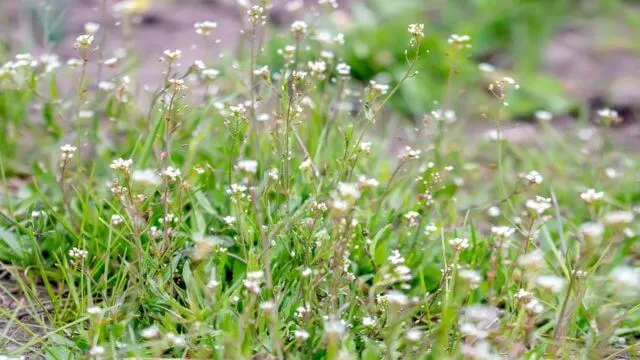
Shepherds Purse Benefits and Traditional Uses

Shepherd’s purse has traditionally been used to support:

  • Traditional field-herb teas and tinctures
  • Older household herbal preparations
  • Fresh herb extracts
  • Aerial-part infusions in folk practice
  • General traditional herb use in rustic formulas

Historically, shepherd’s purse was a familiar country herb in Europe and beyond, often gathered from paths and fields for straightforward household use.

“Shepherd’s purse has long been associated with folk herbal traditions that relied on readily available field plants.”

“Shepherd’s purse has long been one of the small field herbs gathered in traditional country practice.”

— Folk herbal reference

Shepherds Purse Preparation Methods

Shepherd’s purse can be prepared in several traditional ways:


Tea

The dried aerial parts may be steeped in hot water as a traditional herbal tea.

Part of the plant used: Aerial parts

Tincture

Fresh or dried shepherd’s purse may be prepared as a tincture.

Part of the plant used: Aerial parts

Infusion

A mild infusion may be prepared from the flowering herb.

Part of the plant used: Aerial parts

Fresh Herb Preparation

The freshly gathered herb may be used in traditional extract preparations.

Part of the plant used: Aerial parts


Growing Shepherds Purse

Shepherd’s purse is a fast-growing annual or biennial that commonly appears in gardens, paths, fields, and disturbed soil. It is highly adaptable and often flowers over a long season.

  • Prefers full sun to partial shade
  • Grows in average, disturbed, or relatively poor soils
  • Requires moderate water but is adaptable once established
  • Common across USDA zones 3-9 and beyond in much of the United States
  • Thrives in cool seasons and often reseeds freely

Shepherd’s purse is widely regarded as a weed because it self-seeds readily and can appear almost anywhere bare ground is available. It is easy to recognize once the distinctive seed pods form.


Safety Considerations

Shepherd’s purse has a long history of traditional use, however internal use should still be approached with care.

However:

  • Because shepherd’s purse has been associated with circulation-focused and uterine-focused traditional use, pregnant individuals should avoid internal use unless professionally advised.
  • Individuals taking blood pressure medications, anticoagulants, or other prescription drugs should seek professional guidance before use.
  • Strong preparations may cause digestive discomfort in some individuals.
  • Only correctly identified shepherd’s purse should be harvested, as small field plants can be confused when not in flower or seed.
  • Pregnant or breastfeeding individuals should consult a qualified healthcare professional before internal use.
  • Field-harvested plants should not be gathered from sprayed or contaminated ground.

This information is provided for educational purposes only and is not medical advice.

Image Disclaimer: Images are for reference only and should not be used as the sole method of identification. Always confirm identification with a qualified source.
Frequently Asked Questions
What is shepherd’s purse used for?

Shepherd’s purse is traditionally used in teas, tinctures, and simple field-herb preparations made from the aerial parts.

What part of shepherd’s purse is used?

The aerial parts, especially the flowering herb, are the part most often gathered in traditional herbal practice.

Is shepherd’s purse a weed?

Yes. Shepherd’s purse is widely considered a weed because it grows easily in gardens, paths, and disturbed soil and reseeds freely.

How is shepherd’s purse prepared?

It is commonly prepared as a tea, infusion, tincture, or fresh herb extract.

Can shepherd’s purse grow in the United States?

Yes. It is widely naturalized across the United States and can grow in many climates and growing zones.

Are there safety concerns with shepherd’s purse?

Yes. Internal use should be approached carefully, especially during pregnancy or when using prescription medications.

Shepherds Purse Health Benefits and Traditional Uses

Help Us Improve the Shepherds Purse Page

Do you grow, photograph, study, or work with this plant?

If you have an accurate photo, growing experience, traditional use note, identification detail, correction, or useful source to share, we would love to hear from you.

Your contribution may help improve the accuracy, usefulness, and educational value of this page for other readers.


Share a photo, correction, or plant note →

Botanical Overview

  • Botanical name: Capsella bursa-pastoris
  • Family: Brassicaceae
  • Plant type: Annual herb
  • Native region: Europe and Asia
  • Common names: Shepherd’s purse, mother’s heart