

Yarrow Benefits & Uses (Achillea millefolium)

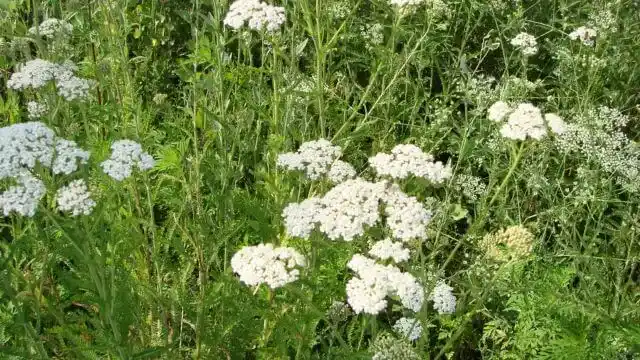
Yarrow (Achillea millefolium) is a perennial flowering herb in the daisy family (Asteraceae) found across Europe, Asia, and North America. It has finely divided feathery leaves and flat clusters of white to pale pink flowers. The leaves and flowering tops are the parts most often used in traditional herbal preparations.

In Western herbal traditions, yarrow has long been associated with bitter aromatic teas, topical use, and seasonal support formulas. It has also been a common plant in folk herb gardens because it is hardy, useful, and easy to recognize.

Yarrow’s fern-like leaves and broad flower heads make it one of the most familiar meadow herbs in both wild and cultivated settings. The Yarrow plant is used to create Yarrow essential oil which has many benefits and uses.

Yarrow Benefits and Traditional Uses

Yarrow (Achillea millefolium), a member of the Asteraceae family, is an ancient European herb that has long held an important place in traditional herbal practice. Widely regarded as a staple of the home apothecary, it has been used across generations in connection with the cardiovascular, digestive, and genitourinary systems.

Yarrow has traditionally been used to support:

  • Traditional seasonal herbal teas
  • Aromatic digestive support formulas
  • Topical washes, poultices, and compresses
  • Traditional preparations associated with circulatory and general wellness practices
  • Herbal preparations associated with minor skin support

Historically, yarrow has been valued in both European and North American herbal traditions and is one of the best-known folk herbs of field and meadow. It was widely used in teas, poultices, and household herbal preparations, and remains a well-recognized herb in traditional herbal systems today.

“Yarrow has long been one of the most useful field herbs, valued in both the kitchen garden and the household remedy chest.”

— Traditional folk herbal reference

Yarrow Preparation Methods

Yarrow can be prepared in several traditional ways:


Tea

The flowering tops and leaves are commonly steeped in hot water to make a traditional yarrow tea.

Part of the plant used: Leaves and flowering tops

Tincture

Yarrow may be prepared as a tincture for use in measured amounts in traditional formulas.

Part of the plant used: Leaves and flowering tops

Compress

A warm or cooled yarrow infusion may be used externally as a traditional herbal compress.

Part of the plant used: Leaves and flowering tops

Infused Oil

Fresh or dried yarrow may be infused into oil for use in salves and external skin preparations.

Part of the plant used: Leaves and flowering tops


Growing Yarrow

Yarrow is a hardy perennial that spreads gradually to form clumps and patches of finely divided foliage. It thrives in open sunny positions and is widely used in pollinator gardens, meadow plantings, and low-maintenance herb beds.

  • Prefers full sun
  • Grows best in well-drained soil
  • Tolerates drought once established
  • Suitable for USDA zones 3–9 in most parts of the United States
  • Can spread by roots and self-seeding in favorable conditions

Yarrow is easy to grow and is often considered a useful pollinator plant, but it can spread quickly in loose garden beds. Deadheading helps reduce self-seeding if a tidier planting is preferred.


Safety Considerations

Yarrow has a long history of traditional use, however it may not suit everyone and should be used thoughtfully.

However:

  • As a member of the Asteraceae family, yarrow may cause reactions in individuals sensitive to daisies, ragweed, or chamomile.
  • Topical use may irritate very sensitive skin and patch testing is sensible.
  • Yarrow may have mild effects on circulation and should be used cautiously with medications affecting blood clotting.
  • Large amounts may cause digestive discomfort in some individuals.
  • Pregnant individuals are often advised to avoid concentrated internal use unless professionally guided.
  • Correct identification is important because several flat-topped wildflowers can look similar at a glance.
  • Always consult a qualified professional before using herbs for health purposes.

This information is provided for educational purposes only and is not medical advice.

Image Disclaimer: Images are for reference only and should not be used as the sole method of identification. Always confirm identification with a qualified source.
Frequently Asked Questions
What is yarrow traditionally used for?

Yarrow is traditionally used in teas, tinctures, and topical preparations for seasonal support, digestive bitters, and skin-focused herbal practice.

What part of yarrow is used?

The leaves and flowering tops are the parts most commonly used in herbal preparations.

Can yarrow grow in the United States?

Yes. Yarrow grows widely across the United States and is usually hardy in USDA zones 3–9.

Is yarrow easy to grow?

Yes. Yarrow is generally easy to grow in full sun with well-drained soil and becomes drought tolerant once established.

Is yarrow considered a weed?

Yarrow can spread by roots and seed, so in some gardens it behaves more like a vigorous meadow plant than a delicate herb.

Are there safety concerns with yarrow?

Yes. People with daisy-family allergies should use caution, and concentrated internal use may not suit everyone.

Yarrow Benefits and Medicinal Uses

Help Us Improve the Yarrow Page

Do you grow, photograph, study, or work with this plant?

If you have an accurate photo, growing experience, traditional use note, identification detail, correction, or useful source to share, we would love to hear from you.

Your contribution may help improve the accuracy, usefulness, and educational value of this page for other readers.


Share a photo, correction, or plant note →

Botanical Overview

  • Botanical name: Achillea millefolium
  • Family: Asteraceae
  • Plant type: Perennial herb
  • Native region: Europe, Asia, and North America
  • Common names: Common yarrow, milfoil, soldier's woundwort