

Bergamot Hand Balm
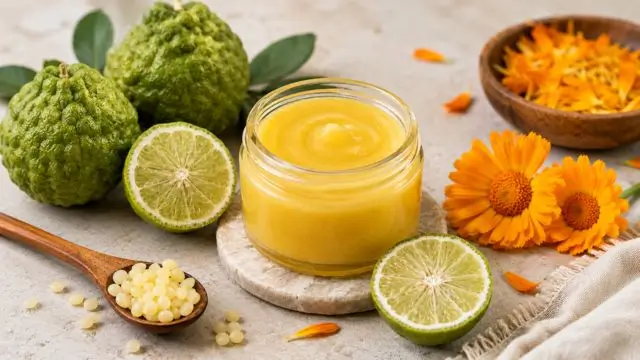
This bergamot hand balm is a rich, pocket-friendly balm for dry hands, rough knuckles, and cuticles that need a little extra care. It uses a simple 4 oz balm base with calendula-infused oil, beeswax, vitamin E, and a soft citrus-herbal aroma.
Because this is a leave-on skin recipe, it should be made with Bergamot FCF or Bergamot BF essential oil only. Regular expressed bergamot can be phototoxic on skin that is later exposed to sunlight.
Benefits
This calendula and bergamot balm is made for dry, rough, or weather-stressed skin. Calendula-infused oil helps soften and comfort the skin, while Bergamot FCF, lavender, and cedarwood create a calm citrus-floral aroma that makes the balm especially lovely for evening use, hands, cuticles, elbows, heels, and small dry patches.
- Creates a protective balm layer for dry hands without needing water or preservatives.
- Pairs calendula-infused oil with beeswax for a classic herbal hand salve texture.
- Uses a cheerful citrus aroma that feels fresh, clean, and uplifting.
- Works well as a nighttime hand balm, cuticle balm, or garden-hand balm.
Ingredients
- 6 tablespoons calendula-infused olive oil or sunflower oil (83 g)
- 1 tablespoon plus 1 teaspoon beeswax pellets or grated beeswax (16 g)
- ¼ teaspoon vitamin E oil (1 g)
- 10 drops Bergamot FCF or Bergamot BF essential oil
- 4 drops lavender essential oil
- 3 drops cedarwood essential oil
Ingredient Notes
Bergamot FCF or BF essential oil:
This photo-safe version gives the balm its bright citrus-floral scent without the phototoxic concern of regular expressed bergamot in leave-on skin care.
Calendula-infused oil:
Calendula is a traditional choice for dry, weathered, or over-washed hands and gives the balm a gentle herbal base.
Beeswax:
Beeswax firms the balm and leaves a light protective feel on the skin.
Lavender and cedarwood:
Lavender softens the citrus note, while cedarwood adds a warm, grounding finish.
Recommended Supplies
These simple supplies help keep the bergamot hand balm clean, consistent, and easy to make at home.
- Double boiler or heat-safe jar set in a saucepan
- Digital scale or measuring spoons
- 4 oz tin, jar, or two 2 oz tins
- Small spatula or stirring utensil
- Labels and clean paper towel
Equipment
- Double boiler or heat-safe jar in a saucepan
- 4 oz tin or glass jar
- Stirring utensil
- Small spatula
- Labels
Method
- Add the calendula-infused oil and beeswax to a heat-safe jar or double boiler.
- Warm gently over low heat until the beeswax is fully melted.
- Remove from heat and stir in the vitamin E oil.
- Allow the mixture to cool for 1–2 minutes, then stir in the essential oils.
- Pour into a clean 4 oz tin or jar and let it set uncovered until firm.
- Cap, label, and allow the balm to finish cooling before use.
How to Use
Apply a pea-size amount to clean, dry hands and massage into knuckles, fingertips, and cuticles. Use after washing hands, before gardening gloves, or before bed. A little goes a long way, so start small and add more only where needed.
Storage
Store tightly capped in a cool, dry place away from direct sunlight. Use within 6–12 months, or sooner if the scent or texture changes.
Variations & Substitutions
Alternative Variations
Extra Gentle Bergamot Hand Balm
- 6½ tablespoons calendula-infused oil
- 1½ tablespoons beeswax
- ¼ teaspoon vitamin E oil
- 8 drops Bergamot FCF or BF essential oil
- 5 drops lavender essential oil
Herbal Garden Hand Balm
- 6½ tablespoons plantain or calendula-infused oil
- 1½ tablespoons beeswax
- ¼ teaspoon vitamin E oil
- 8 drops Bergamot FCF or BF essential oil
- 5 drops cedarwood essential oil
- 3 drops rosemary essential oil
Unscented Sensitive Skin Version
- Use the same balm base and leave out all essential oils.
Safety Considerations
- For external use only; do not ingest bath, body, or aromatherapy blends.
- Perform a patch test before using any new essential oil blend on the skin.
- Avoid contact with eyes, mucous membranes, broken skin, and freshly shaved or irritated areas.
- Keep away from children and pets, and consult a qualified professional before use during pregnancy, nursing, with a medical condition, or on children.
- For leave-on skin use, choose Bergamot FCF or Bergamot BF essential oil. Regular expressed bergamot can be phototoxic on skin exposed to sunlight or tanning beds.
Additional Notes
For a softer balm, reduce the beeswax slightly; for a firmer balm, add a few extra beeswax pellets. If selling or gifting, list Bergamot FCF or BF clearly on the label so users know it was made with a photo-safe bergamot option.
This recipe is for educational and personal use only. It is not intended to diagnose, treat, cure, or prevent any condition.
For this leave-on hand balm, use Bergamot FCF or Bergamot BF only. Regular expressed bergamot can be phototoxic if the skin is exposed to sunlight or tanning beds after application.
It is a water-free balm, so it will feel richer than lotion. Use a very small amount and massage it in well, especially around knuckles and cuticles.
Yes, if it is made with Bergamot FCF or BF and used in a sensible amount. If you only have regular bergamot, save it for non-skin uses instead of this balm.
Yes. Calendula, plantain, chamomile, or plain sunflower oil can all work. Choose a stable carrier oil with a mild scent so the bergamot aroma stays pleasant.
Graininess usually comes from temperature changes or added butters. Melt gently, stir well, and cool the balm evenly away from drafts.
Avoid applying essential oils to open cracks or bleeding skin. Use an unscented version on compromised skin and seek professional care for persistent cracking.
Recommended Supplies
These simple supplies help keep the bergamot hand balm clean, consistent, and easy to make at home.
- Double boiler or heat-safe jar set in a saucepan
- Digital scale or measuring spoons
- 4 oz tin, jar, or two 2 oz tins
- Small spatula or stirring utensil
- Labels and clean paper towel