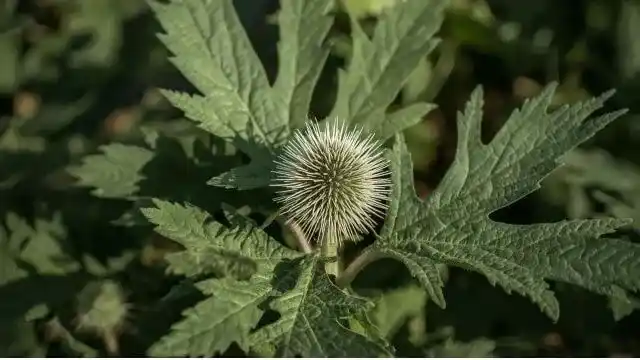
Burdock Benefits & Uses (Arctium lappa)

Burdock is a robust biennial herb with large leaves, burr-like seed heads, and a long taproot that has been used in traditional herbal and culinary preparations for centuries. Native to Europe and Asia and naturalized in North America, it is one of the most familiar roots in traditional Western and Asian herbal practice.

Historically, burdock root was prepared in decoctions, tinctures, and foods, and the plant became well established in old herbal literature. Its long root and strong growth habit continue to make it a recognized herb in traditional botanical discussions.

Burdock inspired Hook and Loop !

Burdock has a long history as a traditional herb, and early records show it was already known in colonial New England by the 1600s. In John Josselyn’s 1672 work New-England’s Rarities Discovered, “the great Clot Bur” is listed among plants observed after English settlement, showing how early burdock was noted in American plant records.

Burdock is also famous for inspiring one of the best-known examples of nature-inspired design. The plant’s clingy burrs are covered with tiny hooks that catch easily on animal fur, wool, and clothing. In the 1940s, Swiss engineer George de Mestral studied the way burdock burrs clung to his clothes and his dog’s coat, an observation that eventually led to the invention of the hook-and-loop fastener later sold as VELCRO® Brand fasteners.

As a plant Burdock has traditionally been used to support:

  • Traditional herbal decoctions
  • Root-based botanical preparations
  • Seasonal household tonics
  • Herbal blends and tinctures
  • Traditional food and herb use

Burdock has a long history in both European and Asian traditions where the root was widely used in decoctions, foods, and botanical preparations. Because of its deep taproot and strong presence in old herbals, it remains one of the classic roots in traditional herbal literature.


Burdock root has long held an important place in traditional herbal and culinary preparations across several cultures.

– Traditional herbal reference

Preparing Burdock

Burdock can be prepared in several traditional ways:


Decoction

Dried burdock root is commonly simmered in water to prepare a traditional herbal decoction.

Part of the plant used: Root

Tincture

The root may be extracted in alcohol for use in concentrated traditional herbal preparations.

Part of the plant used: Root

Roasted Root

Burdock root may be dried and roasted for use in traditional beverage or food preparations.

Part of the plant used: Root

Cooked Root

Fresh burdock root is also used in traditional culinary preparations in some herbal food traditions.

Part of the plant used: Root


Growing Burdock

Burdock is a hardy biennial herb that produces a large leafy rosette in its first year and a tall flowering stalk in its second. It grows readily in open ground and is best given space because of its size and long taproot.

  • Prefers full sun to partial shade
  • Grows best in deep, loose, well-drained soil
  • Benefits from regular moisture while establishing
  • Suitable for USDA hardiness zones 2-10 in the United States
  • Commonly grown where the long root can develop without obstruction

Burdock can become large and self-seed if allowed to flower, so gardeners often harvest the root in the first year before the plant sets burrs.


Safety Considerations

Burdock has a long history of traditional use, however care should always be taken when using herbal plants.

However:

  • Burdock may cause digestive discomfort in some individuals, particularly when strong decoctions or concentrated preparations are used.
  • Because burdock belongs to the Asteraceae family, individuals sensitive to ragweed, daisies, or related plants should use caution.
  • Burdock may have mild diuretic effects and individuals taking diuretic medications should use caution.
  • Fresh burdock root should be accurately identified, as confusion with other roots is possible when foraging.
  • Pregnant or breastfeeding individuals should consult a qualified healthcare professional before using burdock internally.
  • Always consult a qualified healthcare professional before using burdock alongside prescription medications.

This information is provided for educational purposes only and is not medical advice.

Image Disclaimer: Images are for reference only and should not be used as the sole method of identification. Always confirm identification with a qualified source.
Frequently Asked Questions
What is burdock root traditionally used for?

Burdock root has traditionally been used in herbal preparations that support digestion and general wellness. In many herbal traditions the root has also been used in tonics and decoctions, and it has long been valued as both a medicinal herb and a nutritious root vegetable.

What part of burdock is used in herbal preparations?

The root of the burdock plant is most commonly used in herbal preparations. The long taproot is harvested, dried, and prepared in teas, decoctions, tinctures, and traditional herbal tonics.

How is burdock root commonly prepared?

Burdock root is most often prepared as a decoction, which involves simmering the dried root in water to extract its compounds. The root may also be prepared as a tincture or used in traditional herbal formulas.

Is burdock root used as a food?

Yes. Burdock root has long been used as a food in several cultures. In Japanese cuisine it is known as gobo and is commonly cooked in stir-fries, soups, and vegetable dishes.

What herbs are commonly used with burdock?

Burdock root is sometimes combined with herbs such as dandelion root, yellow dock, and red clover in traditional herbal blends that focus on general wellness and digestive support.

Can burdock be grown in the United States?

Burdock grows easily in many regions of the United States. It prefers full sun and loose, well-drained soil so the long taproot can develop properly. The plant grows well in USDA hardiness zones 2–10 and is often cultivated in herb gardens.

Burdock (Arctium lappa) medicinal herb root traditionally used in herbal remedies for skin and detox support

Help Us Improve the Burdock Page

Do you grow, photograph, study, or work with this plant?

If you have an accurate photo, growing experience, traditional use note, identification detail, correction, or useful source to share, we would love to hear from you.

Your contribution may help improve the accuracy, usefulness, and educational value of this page for other readers.


Share a photo, correction, or plant note →

Botanical Overview

  • Botanical name: Arctium lappa
  • Family: Asteraceae
  • Plant type: Root plant
  • Native region: Europe and Asia
  • Common names: Burdock, great burdock, beggar's buttons