

Hinoki Essential Oil

Hinoki Essential Oil is steam distilled from the wood of Chamaecyparis obtusa, a slow-growing Japanese cypress tree native to Japan and parts of East Asia. Often called Japanese Hinoki Cypress, the tree has been valued for centuries in traditional Japanese architecture, temples, baths, and woodworking because of its aromatic wood, durability, and resistance to decay.

Hinoki wood is especially associated with traditional Japanese ofuro baths, meditation spaces, and sacred temple construction, where its clean forest aroma became deeply connected with calm, purity, and relaxation. Today, Hinoki Essential Oil is widely used in aromatherapy, spa products, natural perfumery, and luxury home fragrance blends because of its smooth woody scent and refined forest character.

Although Hinoki Cypress is native to Japan, the tree is now also cultivated ornamentally in parts of the USA, Europe, Australia, and other temperate regions. However, authentic Hinoki Essential Oil is still most strongly associated with Japanese-grown wood and traditional Japanese distillation practices.

Using Hinoki EO

Common Uses

  • Diffuser blends for meditation, relaxation, and spa-style atmospheres
  • Natural room sprays, linen sprays, and home fragrance products with a clean forest aroma
  • Massage oils and body blends where a smooth woody scent is desired
  • Bath salts, shower steamers, and Japanese-inspired bathing rituals
  • Woody natural perfumes and grounding aromatic blends
  • Luxury candles and wellness-style home fragrance products

Targeted Uses

  • Hinoki Essential Oil is especially suited to blends where a calm forest, polished wood, or clean spa-like atmosphere is desired rather than a heavy smoky wood profile
  • It works particularly well in evening diffuser blends because the aroma feels softer, lighter, and less overpowering than many traditional wood oils
  • Hinoki can help soften sharper resinous or herbal oils while still maintaining depth and structure in a blend
  • Its refined woody profile makes it useful in minimalist perfumery and modern wellness-style aromatic products
  • Hinoki is often chosen when creating Japanese-inspired bath, meditation, or relaxation-focused formulations

Aromatic Profile

Hinoki Essential Oil has a clean, elegant wood aroma often described as soft cedarwood combined with fresh forest air and subtle citrus-resin notes. Compared to heavier wood oils, Hinoki usually feels lighter, calmer, and more refined in diffusion.

  • Scent family: Woody
  • Fragrance notes: Dry wood, forest air, soft resin, subtle citrus, polished timber
  • Similar to: Cedarwood, Cypress, Arborvitae, Sandalwood

Hinoki Essential Oil is valued for its elegant forest aroma and its long association with Japanese wellness and bathing traditions.

Flowers & Herbs

Hinoki Essential Oil Preparation Methods

Hinoki Essential Oil can be prepared in several practical ways:


Topical Application

Dilute a few drops of Hinoki Essential Oil into a carrier oil such as jojoba, sweet almond, or fractionated coconut oil before applying to the skin. Hinoki is commonly used in grounding massage oils, spa-style body oils, and woody aromatic blends. For general adult body use, start around a 1–2% dilution.


Diffuser

Hinoki Essential Oil is popular in diffusers for creating a calm forest-like atmosphere. Add approximately 3–5 drops to a diffuser with water and allow the clean woody aroma to fill the room. Hinoki blends especially well with cedarwood, bergamot, lavender, frankincense, and sandalwood for meditation or evening relaxation blends.


Bath

For a spa-inspired bath routine, dilute a few drops of Hinoki Essential Oil into a bath-safe dispersant before adding to warm bathwater. Hinoki is often associated with traditional Japanese-style bathing atmospheres because of its smooth wood aroma and fresh forest character.


Room Spray

Hinoki Essential Oil can be added to a properly formulated room spray base for a clean wood and forest-inspired home aroma. It is especially popular in natural home fragrance blends, meditation rooms, yoga spaces, and spa-style environments.


Natural Body & Linen Sprays

Hinoki is sometimes used in natural body sprays, linen sprays, and deodorant-style blends because of its clean woody aroma. It pairs especially well with cedarwood, fir needle, bergamot, tea tree, and citrus oils in fresh-smelling formulations.


Safety Considerations
  • Always dilute before topical use
  • Perform a patch test before wider skin application
  • Keep away from eyes and sensitive areas
  • Keep out of reach of children and pets
  • If pregnant, nursing, or under medical care, seek professional guidance before use
Image Disclaimer: Images are for reference only and should not be used as the sole method of identification. Always confirm identification with a qualified source.
Hinoki Essential Oil FAQ
What does Hinoki Essential Oil smell like?

Hinoki Essential Oil has a smooth woody aroma often compared to fresh forest air, cedarwood, soft resin, and polished Japanese cypress wood.

What is Hinoki Essential Oil used for?

Hinoki Oil is commonly used in diffusers, meditation blends, room sprays, massage oils, spa products, and natural home fragrance routines.

Is Hinoki Essential Oil calming?

Many people describe Hinoki Essential Oil as calming, grounding, and peaceful due to its smooth forest-like aroma.

What blends well with Hinoki Essential Oil?

Hinoki blends well with cedarwood, frankincense, sandalwood, bergamot, lavender, yuzu, and cypress essential oils.

Is Hinoki the same as cedarwood?

No. Hinoki is a Japanese cypress wood oil with a cleaner and more refined aroma, while cedarwood oils are typically warmer and heavier.

Is Hinoki Essential Oil rare?

Compared to common oils like lavender or peppermint, authentic Hinoki Essential Oil is relatively uncommon and is often sourced from Japan.

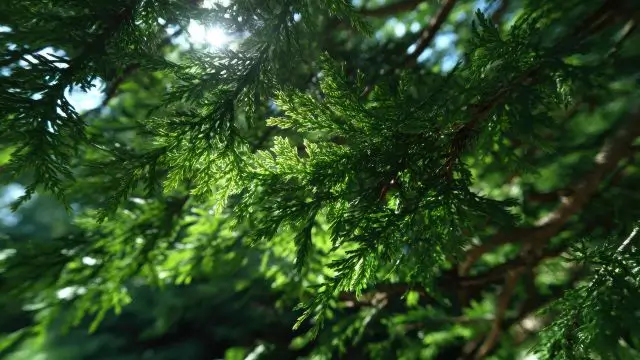
Hinoki Tree Leaves

Essential Oil Overview

  • Botanical name: Chamaecyparis obtusa
  • Plant part used: Wood
  • Extraction method: Steam Distillation
  • Aroma profile: Woody, dry, smooth, resinous, fresh forest aroma
  • Aroma note: Middle to Base Note
  • Key components: Sabinene, limonene, terpinenes, alpha-pinene
  • Top benefits:
    • Grounding aroma, calming atmosphere, meditation blends, spa-style fragrance, natural home scenting

Types Available

Hinoki Essential Oil is generally sold as a single Japanese cypress oil distilled from *Chamaecyparis obtusa*. Some suppliers may also offer related Japanese wood oils or blended hinoki fragrance oils.