

Essential Oil Drops to mL Conversion Chart (Oil-by-Oil Guide)
Essential oil recipes often measure tiny amounts in drops, but drops are not as exact as they look. A lavender drop, a lemon drop, and a vetiver drop may behave very differently because each essential oil has its own texture, viscosity, aroma strength, and bottle flow.
This guide gives you a practical drops-to-mL conversion chart, USA measurements, dilution examples, and an oil-by-oil guide for popular essential oils. It is designed for making roll-ons, massage oils, room sprays, pillow sprays, bath blends, balms, and small-batch aromatherapy recipes at home.
The most common working estimate is 1 mL equals about 20 drops, but this page explains when that estimate works, when it becomes unreliable, and why thick oils such as vetiver, myrrh, patchouli, and sandalwood may need a more patient measuring method.
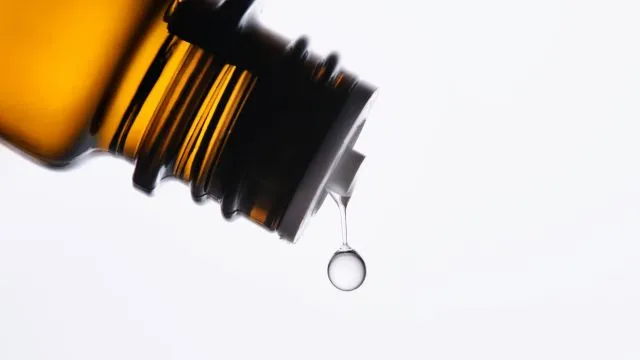
How Many Drops Are in 1 mL of Essential Oil?
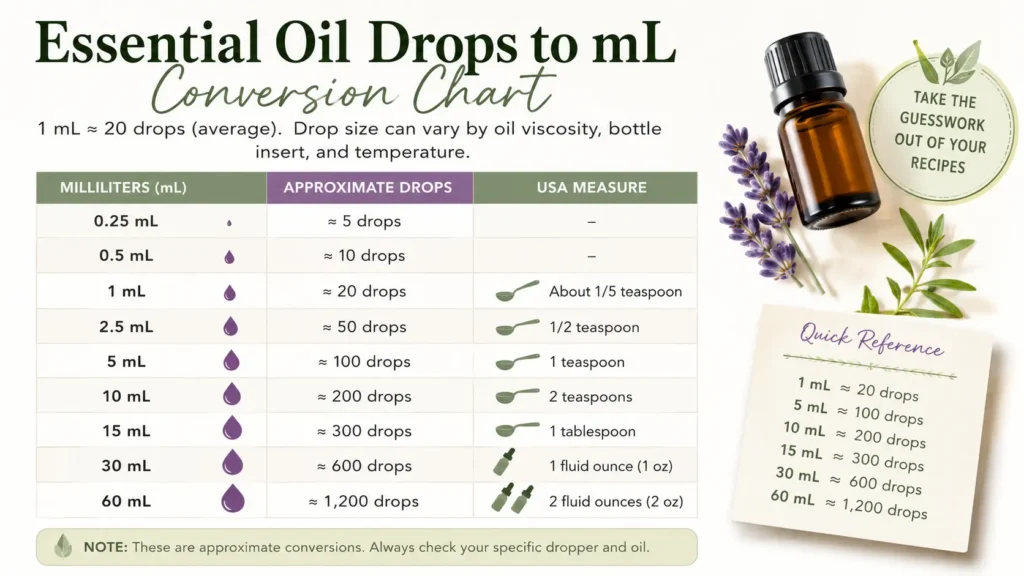
In many essential oil recipes, 1 mL is estimated as about 20 drops. This is a helpful kitchen-style conversion, especially for small DIY batches, but it should be treated as an estimate rather than a laboratory measurement.
Drop size can change according to the oil, the reducer insert in the bottle, the angle of the bottle, room temperature, and the thickness of the oil. Thin citrus oils often drip quickly, while heavy base notes can move slowly or cling to the bottle opening.
| Measurement | Approximate Drops | USA Kitchen / Bottle Measure | Best Use |
|---|---|---|---|
| 0.25 mL | ~5 drops | Very small recipe amount | Facial blends, spot blends, cautious aroma adjustment |
| 0.5 mL | ~10 drops | Small recipe amount | Roll-ons, small test blends, scent balancing |
| 1 mL | ~20 drops | About 1/5 tsp | Most common essential oil conversion estimate |
| 2.5 mL | ~50 drops | 1/2 tsp | Larger blends, master blends, room sprays |
| 5 mL | ~100 drops | 1 tsp | Small essential oil bottle size |
| 10 mL | ~200 drops | 2 tsp | Standard roll-on bottle size |
| 15 mL | ~300 drops | 1 tbsp | Common essential oil bottle size |
| 30 mL | ~600 drops | 1 fl oz / 2 tbsp | Massage oils, body oils, sprays |
| 60 mL | ~1,200 drops | 2 fl oz / 1/4 cup | Room sprays, pillow sprays, body sprays |
| 120 mL | ~2,400 drops | 4 fl oz / 1/2 cup | Balms, salves, larger body oil batches |
Quick rule: use 20 drops per mL for everyday recipe planning, but measure by weight when you need accuracy, repeatability, or a more professional formula.
USA Essential Oil Dilution Chart by Bottle Size
For topical recipes, drop counts are most useful when they are connected to dilution. A 10 mL roll-on, 1 fl oz (30 mL) massage oil, and 4 fl oz (120 mL) balm batch all need different drop amounts to reach the same dilution percentage.
The chart below uses the common estimate of 20 drops per mL and is intended for general adult body-care recipes. Facial recipes, children’s blends, pregnancy, sensitive skin, and strong oils such as clove, cinnamon, oregano, thyme, and wintergreen require more cautious dilution choices.
| Finished Product Size | 1% Dilution | 2% Dilution | 3% Dilution | Typical Use |
|---|---|---|---|---|
| 10 mL roll-on | 2 drops | 4 drops | 6 drops | Roll-ons, pulse point blends |
| 1 fl oz (30 mL) bottle | 6 drops | 12 drops | 18 drops | Facial oils, body oils, massage oils |
| 2 fl oz (60 mL) bottle | 12 drops | 24 drops | 36 drops | Sprays, massage oils, body oils |
| 4 fl oz (120 mL) batch | 24 drops | 48 drops | 72 drops | Balms, salves, body oils |
Essential Oil Drop Behavior Chart for Popular Oils
This chart is where essential oil measuring becomes more realistic. The number of drops in 1 mL is not identical for every oil because each oil flows differently. Instead of pretending every bottle behaves the same way, use the notes below to understand what is likely to happen when you count drops in real recipes.
| Essential Oil | Botanical Name | Typical Flow | Drops-per-mL Reality | Recipe Notes |
|---|---|---|---|---|
| Lavender | Lavandula angustifolia | Medium | Usually close to the 20 drops per mL working estimate. | Easy to measure in roll-ons, balms, bath blends, pillow sprays, and massage oils. |
| Tea Tree | Melaleuca alternifolia | Medium-fast | Drops tend to form cleanly and predictably. | Good for small recipe adjustments where single-drop changes matter. |
| Peppermint | Mentha × piperita | Medium-fast | Often dispenses quickly, so count slowly. | Very strong aroma; small drop changes can noticeably alter a blend. |
| Eucalyptus | Eucalyptus globulus / E. radiata | Medium-fast | Usually thin enough to drip easily. | Helpful in shower steamers, room sprays, and seasonal aroma blends. |
| Lemon | Citrus limon | Fast | Thin citrus oil may produce quick, light drops. | Count carefully because drops can run quickly from the reducer. |
| Sweet Orange | Citrus sinensis | Fast | Usually bright, fluid, and quick-flowing. | Excellent for sprays and diffuser blends; avoid over-pouring. |
| Grapefruit | Citrus paradisi | Fast | A thin citrus oil that can drip rapidly. | Best counted slowly when making 10 mL or 1 oz recipes. |
| Bergamot | Citrus bergamia | Fast to medium | Usually flows more like a citrus oil than a resin. | Use care with topical recipes and choose FCF bergamot when phototoxicity is a concern. |
| Rosemary | Salvia rosmarinus | Medium | Usually near the standard working estimate. | Practical for scalp oils, massage blends, diffuser blends, and sprays. |
| Spearmint | Mentha spicata | Medium-fast | Often easier-flowing than heavy base note oils. | Gentler smelling than peppermint but still aromatic and easy to overdo. |
| Pine | Pinus spp. | Medium-fast | Usually pours smoothly from most reducers. | Count slowly for forest-style sprays and seasonal blends. |
| Basil | Ocimum basilicum | Medium | Typically manageable and not especially thick. | Use small amounts; the aroma can dominate if overused. |
| Clary Sage | Salvia sclarea | Medium | Usually measured easily by drops. | Good for massage oils and relaxation blends where precision matters. |
| Roman Chamomile | Chamaemelum nobile | Medium | Usually drips steadily but can vary by supplier. | Often used sparingly due to cost and aroma strength. |
| Ylang Ylang | Cananga odorata | Medium-slow | Richer and heavier than most citrus or mint oils. | Start with fewer drops; the floral aroma can become overwhelming quickly. |
| Frankincense | Boswellia spp. | Medium-slow | Slightly resinous; may drip slower than lavender. | Useful in balms and facial oils; allow each drop to form fully. |
| Cedarwood | Juniperus virginiana / Cedrus spp. | Medium-slow | Woody oils may feel heavier and slower. | Good base note; count patiently in blends with citrus or herbs. |
| Sandalwood | Santalum spp. | Slow | Thick, smooth, and often slow to leave the bottle. | Better measured patiently or by weight for expensive blends. |
| Patchouli | Pogostemon cablin | Slow | Heavy and sticky compared with most top notes. | Give drops time to form; a toothpick swirl can help in blends. |
| Vetiver | Chrysopogon zizanioides | Very slow / difficult | Extremely thick and may barely drip from some reducer inserts. | Warm the bottle in your hands, remove the reducer if appropriate, or measure by weight. |
| Myrrh | Commiphora myrrha | Very slow | Resinous and sticky; can clog reducer inserts. | Often easier to measure with patience, warmth, or a small glass pipette. |
| Blue Tansy | Tanacetum annuum | Medium | Usually dispenses more easily than thick resins. | Deep color; one drop can tint a blend noticeably. |
| Kunzea | Kunzea ambigua | Medium-fast | Generally flows cleanly from most reducers. | Useful in massage-style blends; count slowly because aroma builds. |
| Clove Bud | Syzygium aromaticum | Medium | Usually easy to dispense, but very potent. | Use with extra caution; low dilution is important for topical recipes. |
Why Some Oils Drip Fast and Others Barely Move
Essential oils are not all the same texture. Some feel thin and bright, while others are dense, resinous, sticky, or slow. This matters because a “drop” is formed by the oil leaving the reducer insert, and that process changes when the oil is thick, cold, or unusually clingy.
| Oil Type | Common Examples | What Happens in the Bottle | Practical Measuring Tip |
|---|---|---|---|
| Thin top notes | Lemon, grapefruit, sweet orange, eucalyptus | Drops may appear quickly and can run together if the bottle is tipped too far. | Hold the bottle closer to upright and count slowly. |
| Balanced middle notes | Lavender, rosemary, clary sage, basil | Often the easiest group to measure by drops. | The 20 drops per mL estimate is often acceptable for casual recipes. |
| Rich floral oils | Ylang ylang, Roman chamomile | Aroma strength matters as much as drop count. | Start low, blend, then adjust after the scent settles. |
| Woody and resinous base notes | Frankincense, cedarwood, sandalwood, patchouli, myrrh, vetiver | Drops may be slow, sticky, uneven, or difficult to release. | Warm the bottle in your hands and consider weighing for accuracy. |
Why Vetiver Is the Classic Difficult Oil
Vetiver essential oil is famous for being difficult to dispense. It is thick, earthy, heavy, and slow-moving, so it may not drip normally from a standard reducer cap. If your recipe calls for vetiver, be patient. Warm the bottle in your hands, let the drop form slowly, or use a clean glass pipette if the bottle design allows it.
For a polished formula, especially if you are making the same recipe repeatedly, measuring vetiver by weight can be much more reliable than waiting for slow drops.
When to Use Drops, mL, Teaspoons, Ounces, or Weight
Each measurement style has a place. Drops are convenient for small-batch blending, while mL and weight are better for repeatable formulas.
- Use drops for 10 mL roll-ons, tiny test blends, aroma adjustments, and beginner recipes.
- Use mL when making larger essential oil blends or when scaling a recipe cleanly.
- Use teaspoons and ounces mainly for carrier oils, hydrosols, salts, butters, and finished product size.
- Use weight for professional formulas, thick oils, expensive oils, repeated batches, and recipes where accuracy matters.
A practical Flowers & Herbs approach
For most home recipes, drops are easiest for essential oils and ounces are easiest for finished batch size. For example, a 10 mL roll-on may use 2–6 drops total, while a 4 oz (120 mL) balm may use dozens of drops depending on the intended dilution and the oils chosen.
Essential Oil Measuring Tips for Better Blends
Good measuring habits make your recipes easier to repeat and more pleasant to use.
- Hold the bottle almost vertical, not fully upside down, when working with fast-flowing oils.
- Let thick oils form each drop fully instead of shaking the bottle hard.
- Write down the exact number of drops used, especially when testing a new blend.
- Smell the blend after resting for a few minutes; base notes can bloom slowly.
- Use a glass pipette for thick oils only when you can keep everything clean and avoid contaminating the bottle.
- For strong oils, use the dilution chart rather than adding extra drops for a stronger aroma.
Final Thoughts
Drop charts are helpful, but they are not absolute. The best approach is to use 20 drops per mL as a practical starting point, then adjust your measuring method for the oil in front of you. Thin citrus oils, balanced herbal oils, and thick resinous base notes all ask for slightly different handling.
Once you understand how each oil behaves, your recipes become easier to scale, safer to dilute, and more enjoyable to make.
A common working estimate is about 20 drops in 1 mL of essential oil. This is useful for home recipes, but it is not exact. Drop size changes depending on the oil, bottle reducer, temperature, and how quickly the oil flows from the bottle.
No. Thin oils such as lemon, grapefruit, sweet orange, eucalyptus, and tea tree often drip quickly, while thick oils such as vetiver, myrrh, patchouli, and sandalwood may form slower, heavier drops. The 20 drops per mL rule is only an estimate.
Vetiver is one of the thickest essential oils commonly used in aromatherapy. It can cling to the reducer insert and may barely drip at room temperature. Warming the bottle in your hands, waiting patiently, or measuring by weight can make vetiver easier to use.
Drops are convenient for small home recipes such as roll-ons, room sprays, and simple blends. Weight is more accurate for professional formulas, repeated batches, expensive oils, thick oils, and recipes where consistency matters. For casual DIY recipes, drops are usually practical enough.
A 10 mL roll-on bottle holds about 200 drops total if using the 20 drops per mL estimate. That total includes the carrier oil and essential oils. For dilution, many adult roll-on recipes use about 2 drops for 1%, 4 drops for 2%, or 6 drops for 3%.
You can, but drops and mL are usually better for essential oils because the amounts are so small. Teaspoons and ounces are more useful for carrier oils, bath salts, sprays, balms, and finished batch sizes. For essential oils, small drop counts are usually easier to control.