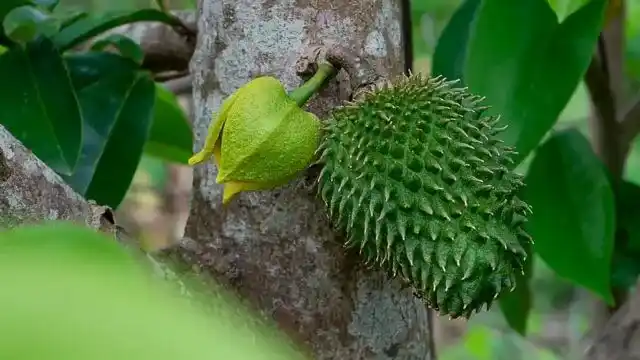

Soursop Benefits & Uses (Annona muricata)

Soursop (Annona muricata) is a tropical evergreen tree in the Annonaceae family native to the Caribbean and tropical regions of the Americas. It produces large green spiny fruit with soft white flesh, while the fruit and leaves are the parts most commonly used in traditional household practice.

In traditional use, the ripe fruit is eaten fresh or blended into drinks, desserts, and cooling recipes, while the leaves are used in some simple herbal infusions. Soursop is better known as a tropical food plant than as a classic temperate medicinal herb.

The seeds are not the edible portion of the fruit and should be removed before eating.

Soursop Benefits and Traditional Uses

Soursop has traditionally been used to support:

  • Refreshing fruit drinks and desserts
  • Traditional leaf infusions
  • Tropical household food and herb use
  • Fruit pulps, juices, and frozen preparations
  • General traditional use of leaves in simple infusions

Historically, soursop has been valued throughout tropical regions for its cooling fruit and for leaf use in household herbal traditions.

“Soursop is especially known as a tropical fruit tree whose fruit and leaves both appear in regional traditions.”

Research into soursop (Annona muricata) has identified a range of bioactive compounds, including acetogenins, flavonoids, and alkaloids, which may contribute to antioxidant, anti-inflammatory, antimicrobial, and blood sugar–modulating effects in laboratory and animal studies. While early findings are promising, most evidence remains preclinical, and further human research is needed to confirm these effects and establish safety.

“Soursop has long been valued in tropical regions both as a refreshing fruit and as part of household leaf infusions.”

— Traditional tropical plant reference

Soursop Preparation Methods

Soursop can be prepared in several traditional ways:


Fruit Drink

The ripe fruit pulp may be blended with water or milk to make a traditional tropical drink.

Part of the plant used: Fruit pulp

Fresh Fruit

Ripe soursop may be eaten fresh after the seeds are removed.

Part of the plant used: Fruit pulp

Leaf Tea

The leaves may be steeped in hot water for a traditional herbal infusion.

Part of the plant used: Leaves

Frozen Dessert

The fruit pulp may be used in sorbets, ice creams, and chilled desserts.

Part of the plant used: Fruit pulp


Growing Soursop

Soursop is a tropical evergreen tree that grows best in warm, humid climates without frost. It produces glossy leaves, pale flowers, and large edible fruit.

  • Prefers full sun
  • Grows best in fertile, well-drained soil with regular moisture
  • Cannot tolerate frost and is best suited to frost-free climates
  • Usually grown outdoors only in USDA zones 10-11 in the United States
  • Best suited to south Florida, Hawaii, and other truly warm tropical or subtropical conditions

Soursop is not considered a weed in the United States. In cooler areas it is usually grown only as a specialty greenhouse or container plant, but fruiting may be limited outside tropical conditions.


Safety Considerations

Soursop has a long history of traditional use as a tropical fruit and household herb, however some parts of the plant require caution.

However:

  • The seeds are not edible and should not be consumed.
  • Concentrated long-term internal use of leaf or extract products should be approached cautiously.
  • Some individuals may experience digestive discomfort from large amounts of the fruit or concentrated preparations.
  • Individuals with low blood pressure or those taking blood pressure medications should seek professional guidance before concentrated use.
  • Pregnant or breastfeeding individuals should consult a qualified healthcare professional before using soursop leaf products internally.
  • Only ripe fruit pulp and correctly identified leaves should be used in appropriate preparations.

This information is provided for educational purposes only and is not medical advice.

Image Disclaimer: Images are for reference only and should not be used as the sole method of identification. Always confirm identification with a qualified source.
Frequently Asked Questions
What is soursop used for?

Soursop is traditionally used as a tropical fruit for drinks and desserts, while the leaves are used in some household herbal infusions.

What part of soursop is used?

The ripe fruit pulp is widely eaten, and the leaves are used in some traditional infusions. The seeds are not the edible part.

Can soursop be used in tea?

Yes. In some traditions the leaves are steeped to make a simple infusion, while the fruit is more commonly used in drinks and desserts.

Can soursop grow in the United States?

Yes, but mainly in frost-free tropical or subtropical areas such as south Florida and Hawaii.

Is soursop a fruit or a herb?

Soursop is a tropical fruit tree, although its leaves are also used in some traditional herbal preparations.

Are there safety concerns with soursop?

Yes. The seeds should not be eaten, and concentrated leaf products should be used cautiously and with professional guidance.

Soursop Health Benefits and Traditional Uses

Help Us Improve the Soursop Page

Do you grow, photograph, study, or work with this plant?

If you have an accurate photo, growing experience, traditional use note, identification detail, correction, or useful source to share, we would love to hear from you.

Your contribution may help improve the accuracy, usefulness, and educational value of this page for other readers.


Share a photo, correction, or plant note →

Botanical Overview

  • Botanical name: Annona muricata
  • Family: Annonaceae
  • Plant type: Fruit tree
  • Native region: Caribbean and tropical Americas
  • Common names: Graviola, guanabana