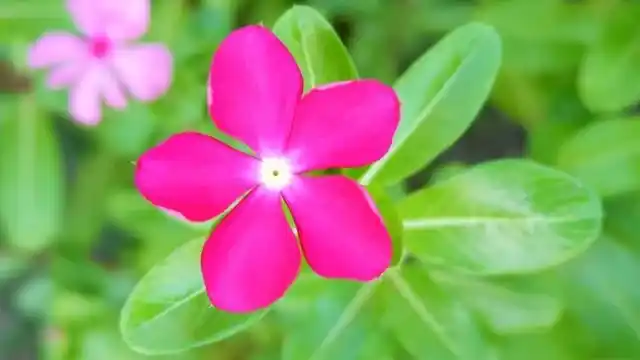

Periwinkle Identification, Uses & Safety (Vinca major)

Periwinkle (Catharanthus roseus) is a tender perennial herb or subshrub in the Apocynaceae family, native to Madagascar. It has glossy opposite leaves and pink, white, or rose-colored flowers, and the leaves and flowering tops have a history of traditional use in several medical systems.

Although periwinkle has an important ethnobotanical history, it is also a poisonous plant containing potent alkaloids. For that reason, it should be treated as a plant of historical and pharmacological interest rather than a casual home-use herb.

Periwinkle contains powerful compounds that are extracted and used in modern pharmaceutical medicine, but the plant itself is not used in home herbal preparations due to its toxicity.

Periwinkle Benefits and Traditional Uses

Periwinkle has traditionally been used to support:

  • Historical Ayurvedic and folk use
  • Traditional external applications in some cultures
  • Pharmacological interest due to alkaloid content
  • Research and educational botanical study
  • Ornamental tropical bedding plant

Madagascar periwinkle became internationally known not only for traditional use but also for its later pharmaceutical significance. “Periwinkle is one of the most striking examples of a traditional plant that later became important in modern pharmacological history.”

“Periwinkle is one of the most striking examples of a traditional plant that later became important in modern pharmacological history.”

— Ethnobotanical reference

Periwinkle Preparation Methods

Periwinkle can be prepared in several traditional ways:

Historical Decoction

Leaves and aerial parts have been used historically in decoctions in traditional systems, but home internal use is not recommended.

Part of the plant used: Leaves and flowering tops
External Wash

Some folk traditions used diluted external preparations, though caution is essential.

Part of the plant used: Leaves
Botanical Study

Today the plant is more often discussed for historical and educational interest than for home herbal preparation.

Part of the plant used: Whole plant


Growing Periwinkle

Periwinkle is a warm-climate ornamental plant that grows quickly in heat and produces a long season of bloom.

  • Prefers full sun to partial shade
  • Grows best in well-drained soil
  • Moderate water needs and good heat tolerance
  • Suitable for USDA zones 10–11 as a perennial and widely grown as an annual elsewhere
  • Commonly planted in warm-season beds and containers across the United States

In frost-free regions it may persist year-round, while in cooler climates it is usually grown as a summer annual. It can self-seed in favorable warm conditions.


Periwinkle is Poisonous – Requires Extreme Caution

This herb has a long history of traditional use, however care should always be taken when using herbal plants.

However:

  • All parts of periwinkle should be considered poisonous if consumed.
  • This is not an appropriate herb for casual self-treatment or home experimentation.
  • Keep away from children and pets.
  • Pregnant or breastfeeding individuals should avoid the plant completely.
  • Not used for health purposes.

This information is provided for educational purposes only and is not medical advice.

Image Disclaimer: Images are for reference only and should not be used as the sole method of identification. Always confirm identification with a qualified source.
Frequently Asked Questions
What is periwinkle traditionally used for?

Periwinkle has a history of traditional use in several herbal systems, but today it is better known for its pharmacological significance and as an ornamental plant. It should not be treated as a casual home-use herb.

Is periwinkle poisonous?

Yes. Madagascar periwinkle is considered poisonous if consumed. All parts of the plant should be approached with caution, and home internal use is not recommended.

What is the botanical name of medicinal periwinkle?

The medicinally referenced plant is usually Catharanthus roseus, also called Madagascar periwinkle or rosy periwinkle.

Can periwinkle grow in the United States?

Yes. It is widely grown in the United States as a warm-season ornamental. In frost-free regions it may act as a perennial, while elsewhere it is typically grown as an annual.

Is periwinkle the same as common vinca groundcover?

Not exactly. The medicinally noted plant is usually Catharanthus roseus, while common garden vinca groundcovers belong to different species in the Vinca genus.

Should periwinkle be used at home as an herb?

No. Because the plant contains potent alkaloids and is poisonous, it is not suitable for unsupervised home herbal use.

Periwinkle Traditional Uses

Help Us Improve the Periwinkle Page

Do you grow, photograph, study, or work with this plant?

If you have an accurate photo, growing experience, traditional use note, identification detail, correction, or useful source to share, we would love to hear from you.

Your contribution may help improve the accuracy, usefulness, and educational value of this page for other readers.


Share a photo, correction, or plant note →

Botanical Overview

  • Botanical name: Catharanthus roseus
  • Family: Apocynaceae
  • Plant type: Trailing perennial herb
  • Native region: Madagascar
  • Common names: Madagascar periwinkle, rosy periwinkle, rose periwinkle