
How to Make a Herbal Poultice
A herbal poultice is a soft, moist preparation made from fresh or dried herbs that is applied directly to the skin. This traditional method allows plant material to remain in close contact with the area and is one of the simplest ways to use herbs externally.
Read the step-by-step guide below to learn how to make a herbal poultice yourself.
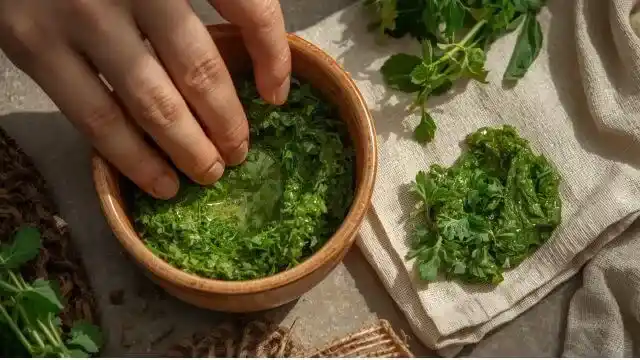
What is a Herbal Poultice?
A herbal poultice is a soft, moist preparation made from fresh or dried plant material that is applied directly to the skin.
The herbs are typically crushed, softened, or mixed with a small amount of liquid to form a paste. This allows the plant material to remain in close contact with the area where it is applied.
Why Use a Herbal Poultice?
Poultices are one of the simplest ways to use herbs externally.
They are commonly used because they:
- Allow direct contact with the plant material
- Are easy to prepare with minimal equipment
- Can be applied warm or cool
- Provide a thick, localized preparation
- Use fresh herbs when available
What you Need
To make a herbal poultice at home:
- Fresh or dried herbs
- A small amount of warm water (or herbal liquid)
- A mortar and pestle, blender, or knife
- Clean cloth or gauze (optional)
Choosing the Right Herbs
Poultices are often made with herbs that are suitable for external use and easy to soften or crush.
Common choices include:
- Plantain (Plantago spp.) – commonly used fresh
- Comfrey (Symphytum officinale) – traditionally used in external preparations
- Calendula (Calendula officinalis) – gentle and commonly used in skin preparations
- Chamomile (Matricaria chamomilla) – soft and easy to work with
- Ginger (Zingiber officinale) – often used warm
Step by Step How to Make a Herbal Poultice
1. Prepare the Herb
Chop fresh herbs or lightly crush dried herbs.
2. Soften (If Needed)
If using dried herbs, add a small amount of warm water to soften them.
3. Crush or Blend
Mash the herbs into a thick paste using a mortar and pestle, blender, or knife.
4. Apply
Spread the paste directly onto the skin or onto a piece of cloth.
5. Cover
Place a clean cloth or gauze over the poultice to hold it in place.
6. Leave in Place
Allow the poultice to sit for a period of time, depending on preference.
Warm vs Cool Poultices
- Warm poultices are often prepared using warm water or gently heated herbs
- Cool poultices are made without heat and may be more suitable for delicate applications
The choice depends on the herb and how it is traditionally used.
How to Use a Herbal Poultice
Poultices are typically:
- Applied directly to the skin
- Used for short periods of time
- Replaced as needed with fresh preparation
Always ensure the area is clean before applying.
Storage and Freshness
Poultices are best made fresh.
- Prepare just before use
- Discard after use
- Do not store for later application
Fresh preparation helps maintain quality and cleanliness.
Final Thoughts
Herbal poultices are a simple and traditional way to use plants externally. With minimal preparation and equipment, they offer a direct and adaptable method for working with fresh or dried herbs.