
How to Blend Essential Oils (Beginner to Intermediate Guide)
Blending essential oils is the practice of combining two or more oils to create a more balanced aroma, a clearer scent direction, or a finished product for diffusion, body care, or home fragrance. Good blending is less about using many oils and more about understanding how different aromas work together.
This guide explains how to build essential oil blends from beginner to intermediate level, including note structure, scent balance, testing methods, and practical blend planning for common home uses. It is written to help readers create combinations that smell intentional rather than accidental.
If you have ever opened several bottles and felt unsure where to start, learning a simple framework for blending can make the whole process feel much more manageable.
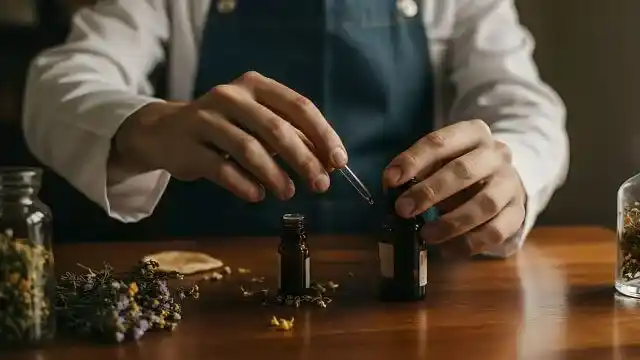
What Makes a Good Essential Oil Blend
A good blend usually has direction. It may feel bright and fresh, soft and floral, grounding and resinous, or clean and herbaceous, but it should smell cohesive rather than scattered.
Many successful beginner blends use only two or three oils. That keeps the aroma easier to understand and makes it simpler to adjust if one note is dominating.
Understanding Top, Middle, and Base Roles
One useful blending framework is to think in terms of top, middle, and base roles.
- Top notes often smell bright, fresh, or quickly noticeable
- Middle notes tend to round out the center of the blend
- Base notes add depth, weight, or staying power
You do not need to use all three in every blend, but the concept helps explain why some combinations feel more complete than others.
Simple Blend Families That Often Work
- Citrus + herb for fresh, kitchen-friendly or daytime blends
- Floral + wood for balanced, softer aroma
- Mint + resin for contrast between freshness and depth
- Herb + citrus + wood for a rounded household blend
Thinking in families is often easier than thinking in isolated bottle names.
How to Test a Blend Before Making a Large Batch
- Start with a tiny test blend first
- Keep notes on drop counts
- Smell the blend immediately and again later
- Adjust one oil at a time
- Test in the intended format, such as diffuser, room spray, or body oil
What You Need
- Two or three essential oils
- A notebook or recipe log
- Small empty bottles or testing strips
- Your intended base, if making a finished product
Step-by-Step: How to Build a Balanced Blend
1. Decide the purpose
Is the blend for a diffuser, room spray, body oil, or roller?
2. Pick a lead oil
Choose the aroma you want people to notice first.
3. Add a supporting oil
Use a second oil to soften, brighten, or ground the first.
4. Add depth if needed
A third oil can help complete the blend.
5. Test small
Start with a tiny batch and keep track of the drops.
6. Refine gradually
Make small changes rather than rebuilding everything at once.
From Beginner to Intermediate Blending
Beginners often focus on simple, intuitive pairings, while intermediate blenders start thinking more about structure, evaporation rate, mood, and how a blend develops over time. Both approaches benefit from careful note-taking.
A Practical Rule
If a blend feels muddy, reduce the number of oils. Clarity often improves when you simplify.
Final Thoughts
Blending becomes easier when you stop trying to force complexity. A clear purpose, a simple structure, and a willingness to test small usually produce the most satisfying results.
Two or three oils are often enough for a beginner blend. Smaller formulas are easier to balance, easier to remember, and easier to adjust. Once you understand how a few oils behave together, it becomes much simpler to expand into more layered or more specialized combinations later.
These terms describe how oils contribute to a blend. Top notes tend to be bright and quick to notice, middle notes help shape the heart of the scent, and base notes add depth and grounding. They are not rigid rules, but they are very useful for building balanced combinations.
Yes, that is one of the smartest habits you can build. Small test batches help you see whether the aroma feels balanced in the intended format. A blend that smells nice in the bottle may behave differently in a diffuser, room spray, or body oil, so testing first saves time and materials.
That often happens when too many oils compete for attention or when the blend lacks a clear direction. Simplifying the formula, reducing stronger notes, or choosing one lead aroma can make the scent feel much cleaner and more intentional.
Yes, and many people use the diffuser as an easy way to test simple aromatic combinations. The main caution is to keep the drop count modest and the blend uncomplicated so you can clearly tell what each oil is adding to the room aroma.
Write down every test, including the oils used, the drop counts, the format, and your impression of the result. A simple notebook or digital recipe log makes a big difference over time because it helps you repeat blends you love and improve blends that still need work.